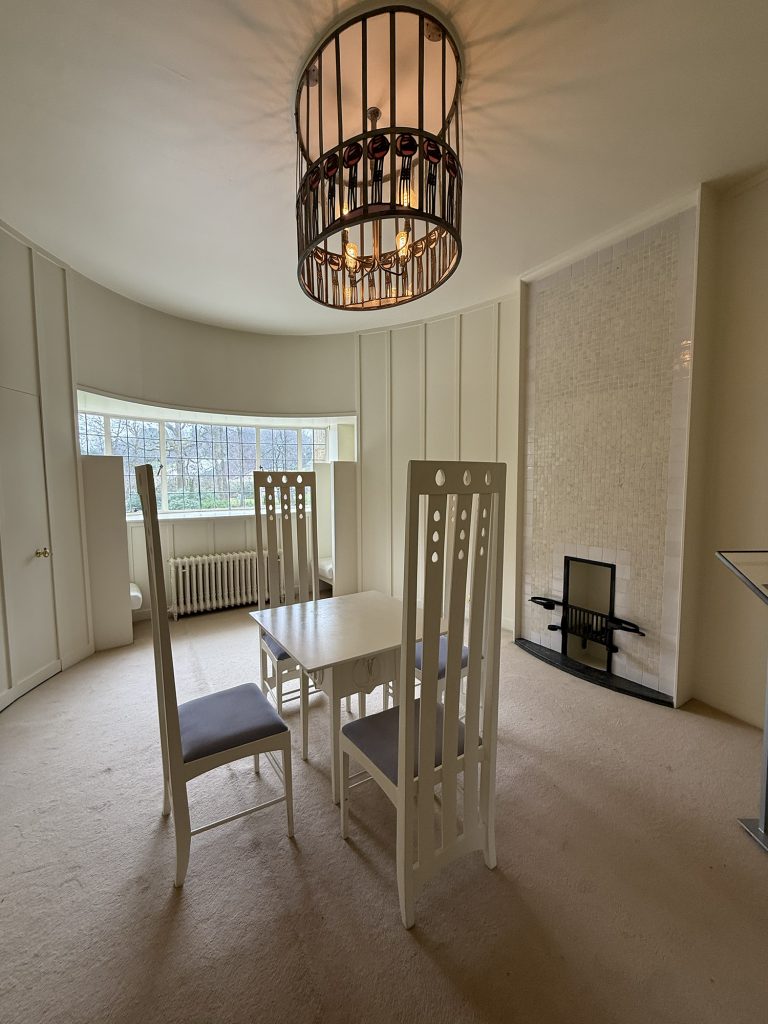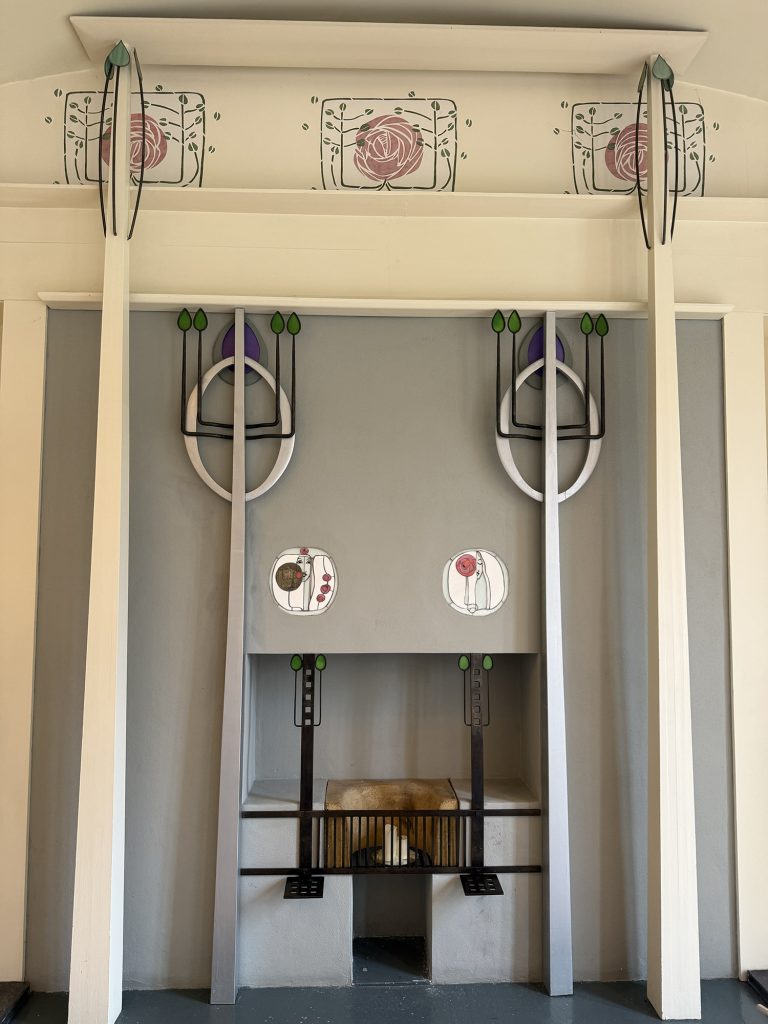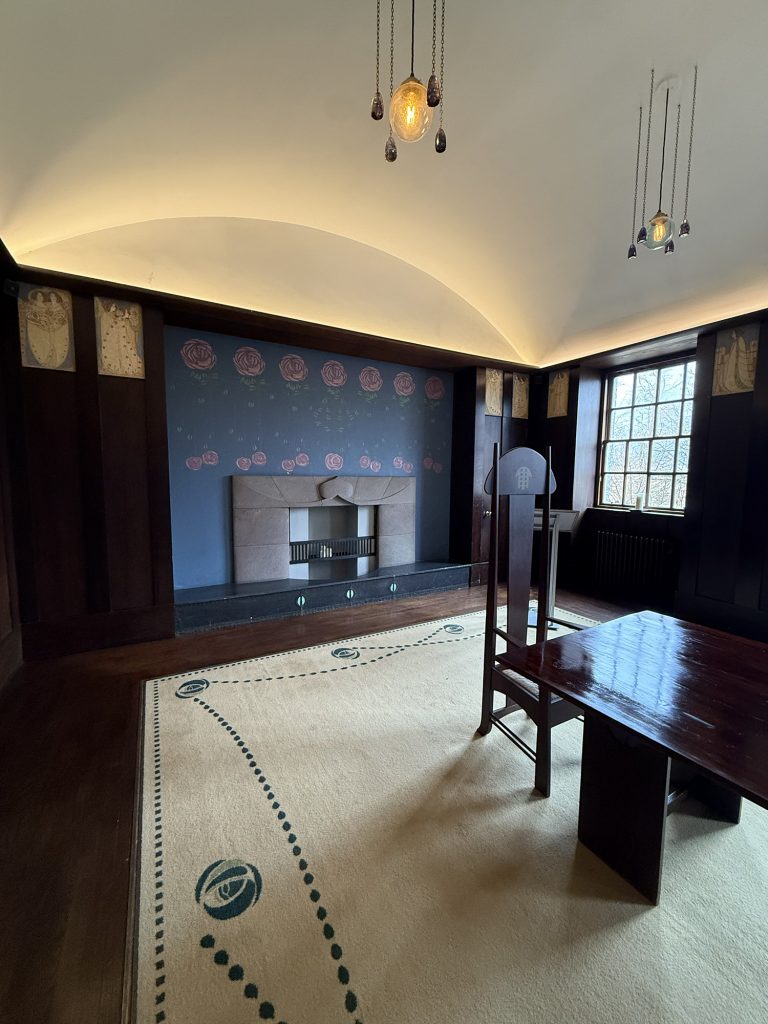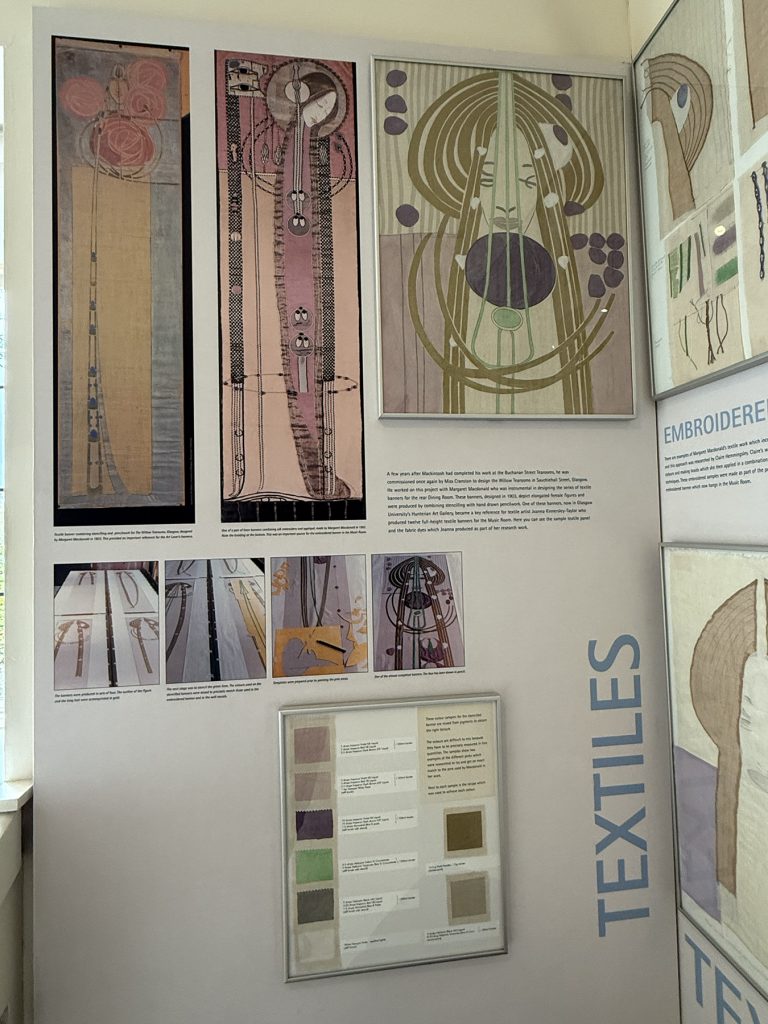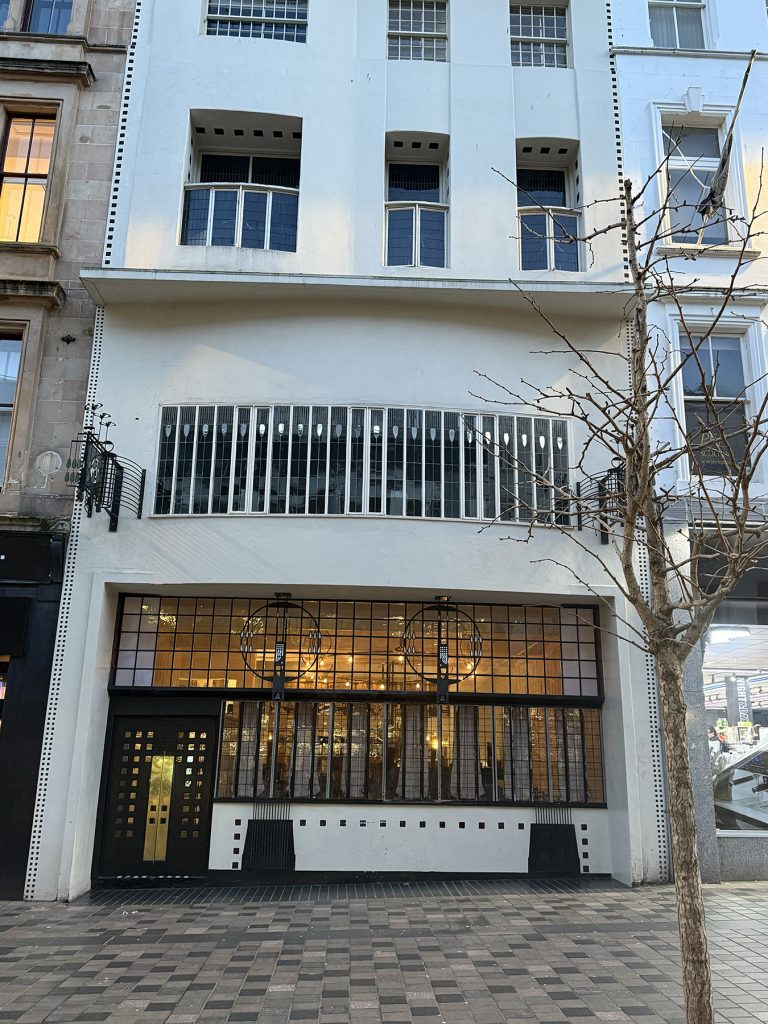
If you pass through Glasgow, Scotland, be sure to seek out some of the splendid interior design and architecture created by Charles Rennie Mackintosh and his wife, Margaret. Charles lived from 1868 to 1928 and met his wife, Margaret Macdonald, at the renowned Glasgow School of Art. Together, they created spaces that were complete works of art, with every detail carefully considered, always including handcrafted furniture, textiles, gesso-paneled paintings, and stained-glass windows.
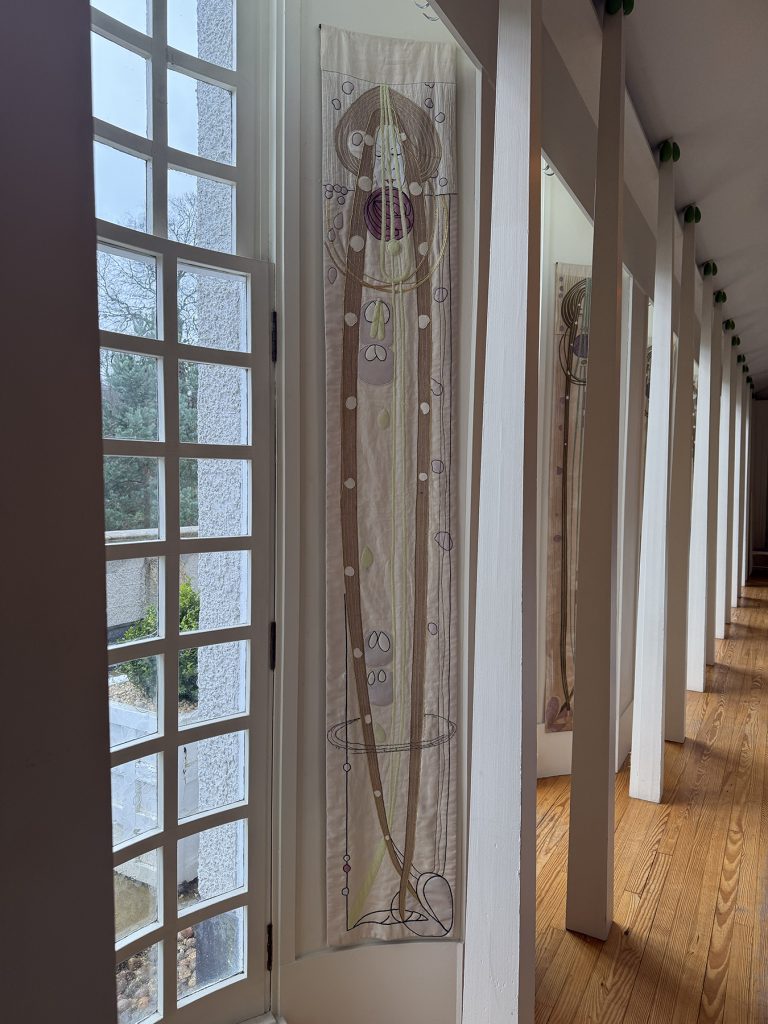
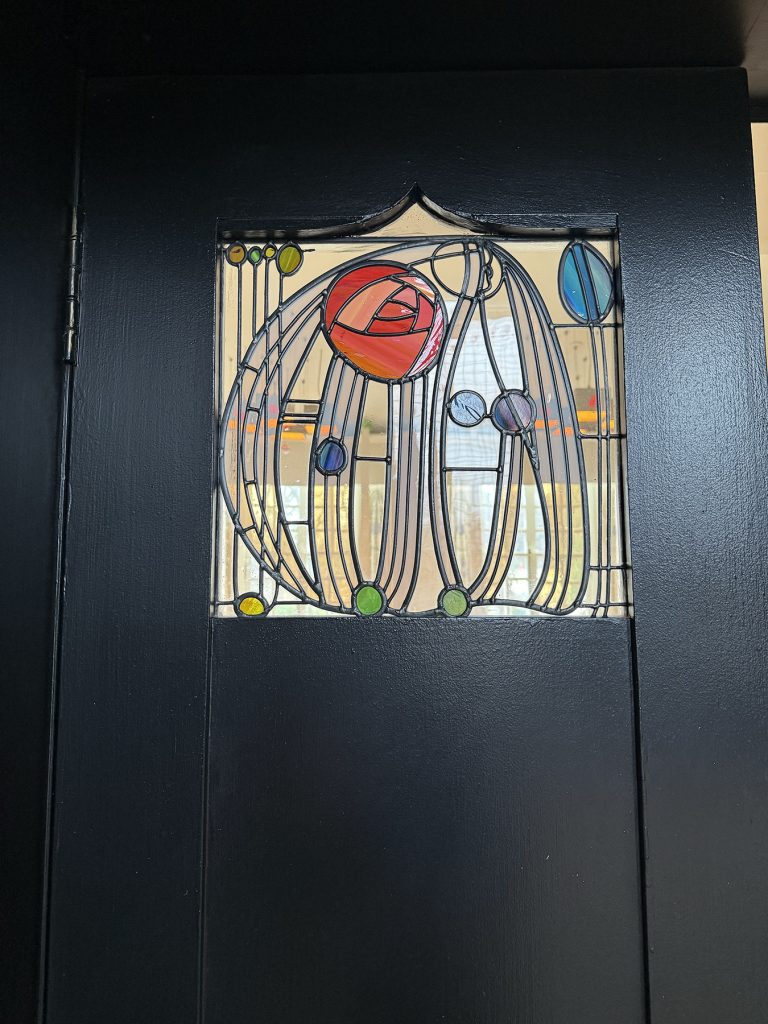
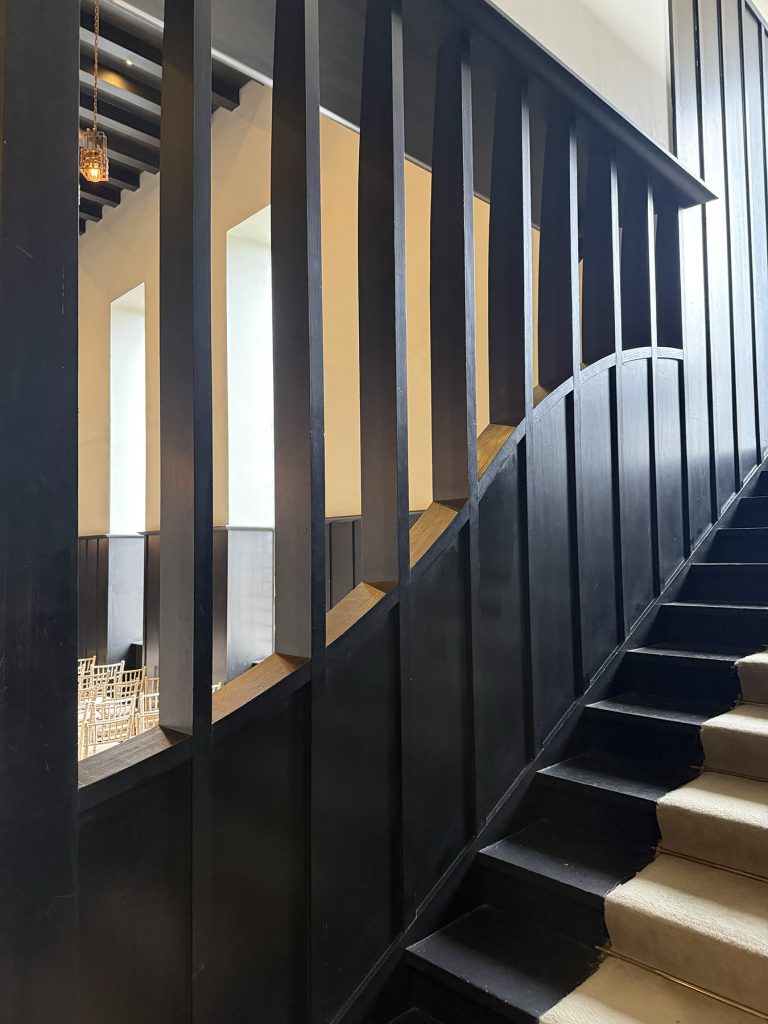
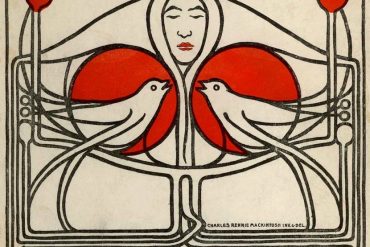
The Mackintoshs were part of a design group known as “The Four,” which also included married couple Herbert McNair and Frances Macdonald (Margaret’s sister). These designers were creating at the turn of the 20th century, when Japanese woodblock prints were circulating in Europe for the first time, and Europeans fell in love with the stylized illustrations and flattened picture plane. Sensual lines and flowing ornament were used in architecture, painting, textile design, furniture, and advertisements. The Mackintosh style combines these sensual, curvy lines with hard right angles in a perfect fusion, as in the gorgeous staircase or the stained-glass pictured above.
Creations from the early 20th century were made with a flair of nostalgia for life before the Industrial Revolution. There was a craving for handmade items; people became tired of mass-produced-products, devoid of character. People sought out products made with a human touch, and the Mackintosh’s work filled this trending desire. The couple exhibited at the 8th Vienna Secession in Austria in 1900, joining the cause to celebrate a total art movement in which the decorative arts were unified with painting and architecture.

Later in life, Charles pivoted away from architecture, and the couple moved to France, where both designers enjoyed watercolor painting until moving back to the U.K. when Charles developed health problems that cut his life short. Margaret did not live much longer. Their major contributions to architecture were a short span from 1895 to 1906, but these creations are timeless and exquisite over 100 years later. A few of their concepts were completed many years after they lived, like House for an Art Lover. Many of the images in this article were taken at this lovely place. The couple truly fulfilled their vision of creating spaces that united the decorative arts with painting and architecture.