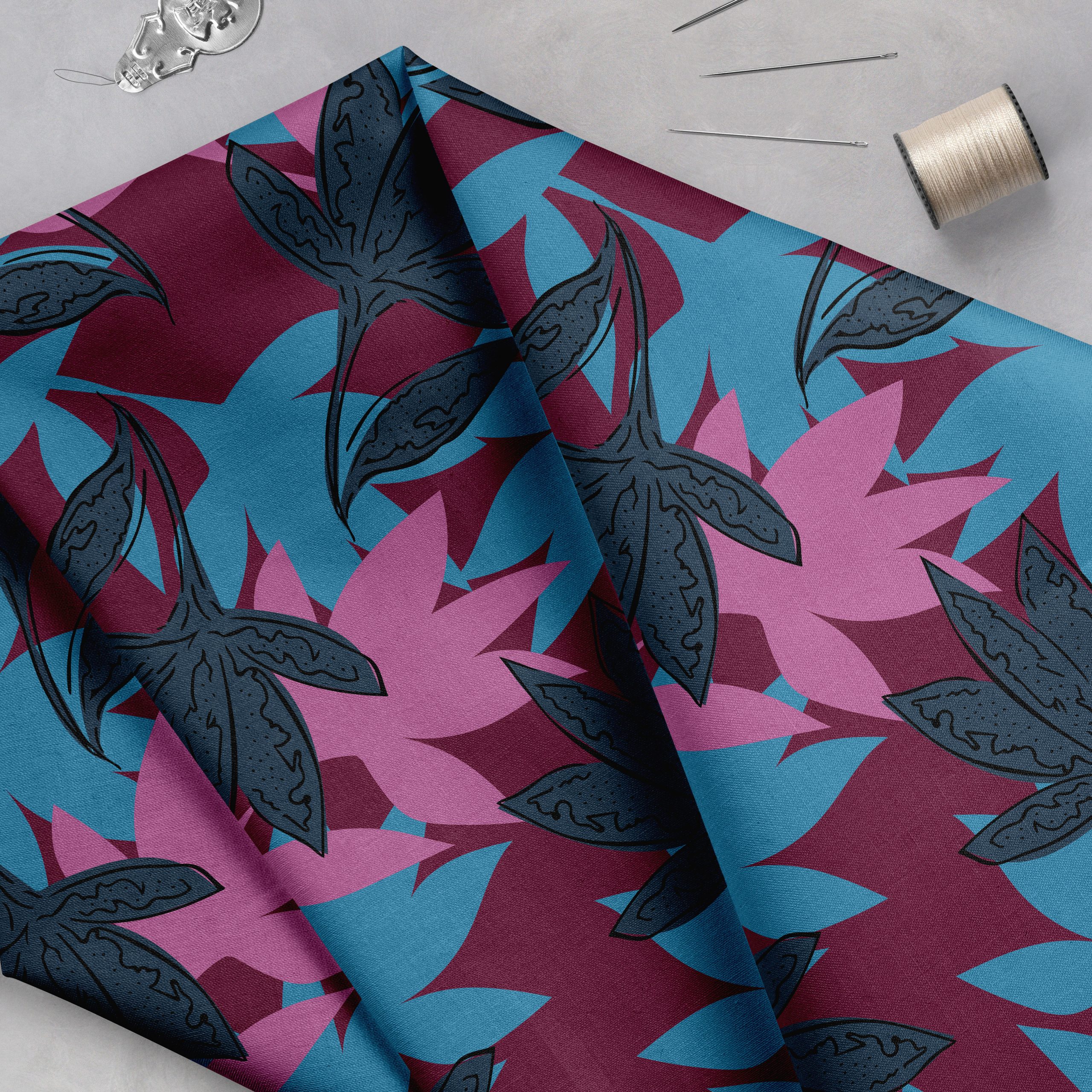
Your portfolio is doing more work than you think. Before a buyer emails you, before an agent considers your work, before a potential client decides to reach out — they’ve already formed an impression from what they see on your website or in your PDF. Your textile design portfolio isn’t just a collection of work. It’s an argument: this is who I am, this is what I make, and this is why you should work with me.
Getting that argument right takes more than accumulating good designs. It takes curation, intention, and an understanding of what the people looking at your portfolio are actually evaluating.
What Belongs in a Textile Design Portfolio
The most common mistake designers make is including too much. A portfolio of sixty designs pulled in too many directions tells a buyer very little about you. A portfolio of twenty focused, consistent pieces tells them exactly what they need to know. What to include:
Hero designs. Your strongest, most distinctive work — the pieces that represent your voice most clearly. These should lead. If a buyer looks at nothing else, your heroes need to communicate your point of view immediately.
Collections, not just individual prints. Most textile buyers think in collections: coordinating prints, secondary patterns, stripe or geo companions. If your portfolio shows only individual hero prints, it can leave a buyer wondering whether you can develop a full range. Include at least one or two cohesive groups of two to four coordinating designs.
Technical range. Depending on the markets you’re targeting, demonstrate that your work translates across scales — a large-scale statement design, a smaller coordinate, a texture or ground. Buyers want to see that you can solve different design problems, not just make beautiful individual prints.
Market-specific work. If you’re targeting quilting fabric, your portfolio should reflect that — appropriate colorways, coordinating collections, the aesthetic sensibility that market responds to. The same applies to apparel, home decor, stationery. A portfolio that’s built for everyone ends up being built for no one.
How Many Pieces
Fifteen to twenty-five designs is the range most industry professionals recommend for a working portfolio. Fewer than fifteen can feel thin; more than thirty-five starts to dilute the impact of your strongest work.
If you’re just starting out and don’t have twenty strong pieces yet, it’s better to show ten pieces you’re genuinely proud of than to pad the portfolio with work you’re less confident in. Buyers are making judgments about your floor, not your average.
Digital Portfolio vs. PDF
Both have a place, and ideally you have both.
Your website portfolio is always-on and discoverable. It’s what comes up when someone Googles your name, what an agent can send to a manufacturer, what a buyer can browse at their own pace. It should be clean, easy to navigate, and updated regularly. If your website hasn’t changed in two years, it reads as inactive.
A PDF portfolio is for targeted outreach — when you’re pitching a specific buyer or applying for representation, a curated PDF lets you tailor your selection to that audience. It’s also easier to share in contexts where a website link doesn’t work well (email attachments, trade show follow-up, submissions to agents).
The rule of thumb: keep your website as your master portfolio, and build targeted PDFs from it as needed.
What Buyers and Agents Are Actually Looking For
Beyond aesthetics, industry buyers are evaluating a few specific things when they review a portfolio:
A clear point of view. They want to understand your voice and whether it fits their brand. Generic work — technically fine but stylistically interchangeable — is easy to pass over. A distinctive aesthetic is memorable.
Technical readiness. Are the repeats clean? Are the files likely production-ready? Work that looks beautiful but shows sloppy repeat construction signals that rework will be needed. Work that shows precision alongside creativity signals a designer who’s ready to work professionally.
Market awareness. Does this designer understand who they’re designing for? Work that reflects genuine knowledge of the category — colorways that fit the market, scales appropriate for the end use — signals a designer who will be easier to work with.
The articles below walk through the specifics: how to build a targeted portfolio project, how to approach digital presentation, what to do when you’re starting from scratch, and more. Use them as a working reference as you develop or refine your portfolio.
 Starting A Successful Design Portfolio Project

When preparing for your first job interview, keep in mind what every manager is looking for in an entry-level employee: a mature train of thought, the ability to be creative, yet precise and the ability to design to the company’s target market. So what is the best way to prove all these qualities to your future employer? The answer is a well crafted design portfolio project, which is designed specifically for the company with whom you are interviewing. Learn more in this post.
How To Build a Portfolio You Can Be Proud Of

Understanding your creative process will help you make decisions as you prepare your portfolio. Thanks to sites like Wix and Squarespace, developing a portfolio that you are proud of is no longer the daunting task that it once was. In this post I share the questions you should ponder to help you clarify your creative process and what you need out of the portfolio before diving in.
Three Ways a Portfolio Website Benefits Your Business
There are three main goals of a textile design portfolio website. First, it should help present your work in the best possible way while marketing explaining your services in a clear manner. Second, the website should enable you to get to know your customers and site visitors. And, third, it should act as a hub for all of your online and offline marketing activities. This post covers the benefits of each of these three aspects of your textile design portfolio website in greater detail.
How Much Artwork Do I Need on My Website?

One of the best ways to learn who your customers are, what style resonates with them, and what they need from you is to put your textile and surface pattern designs out there. But how much artwork should you show? Contrary to belief, textile designers do not need to have hundreds of pieces developed before launching their textile design or surface pattern design portfolio. Learn more about what you should present on the public area of your portfolio website, as well as the benefits of a private textile and surface pattern design portfolio.
Crafting a Beautiful About Page

Writing an About page is one of the most challenging steps to developing a professional textile or surface pattern design website, but it is also one of the most important pages on your site. This page is your opportunity to tell your story and connect with clients on a deeper level. Read this post to learn what should be included to create a compelling About page.
Improve Your Portfolio: Share a Story

As designers we often assume that our work will sell itself. Sometimes this happens, but generally speaking I think we could all be more proactive by telling the story behind our textile and surface pattern design work. When you tell your collection story it allows the buyer to connect with your work in a more meaningful way. Here are a few ideas to help you communicate to a buyer what they are looking at and how this textile and surface pattern design work came to be.