If you’ve spent time in the Textile Design Lab, you already know Amanda Rouse Letscher. She’s our project admin, a university instructor, and one of the people who keeps this whole community running smoothly.
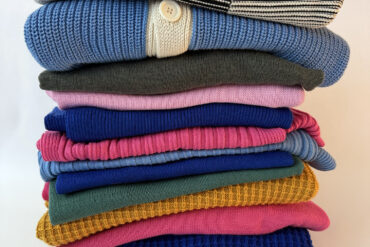
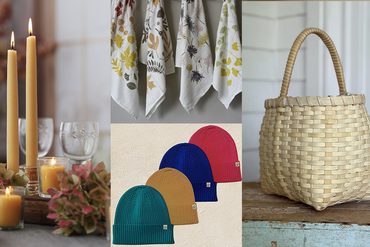
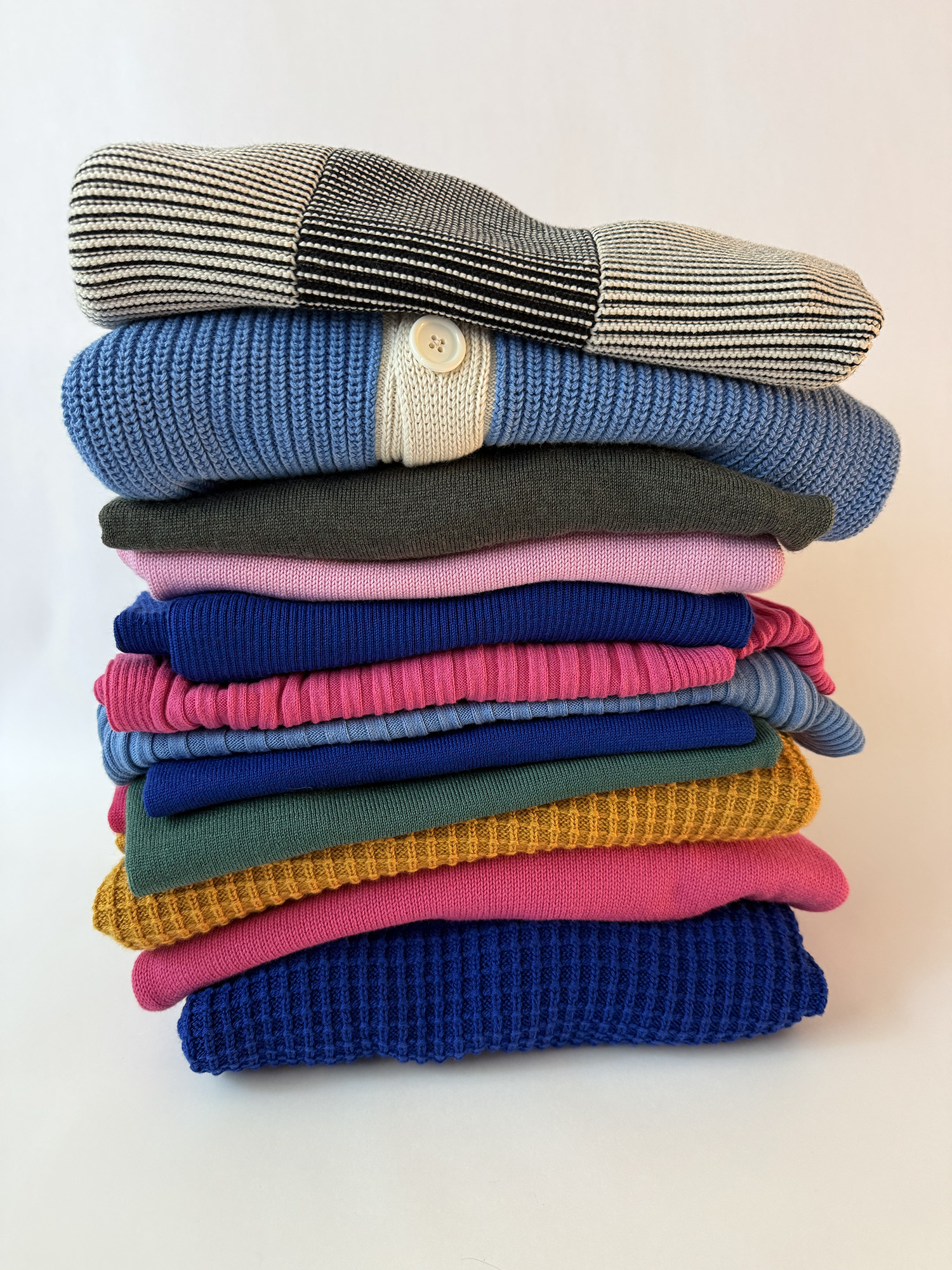
What you may not know is that she’s been quietly building something of her own for years. This fall, Amanda launched Blythly, a knitwear brand built around color, made in the USA, and designed to be as plastic-free as possible.
I wanted to know how a working textile designer goes from licensing artwork to shipping sweaters. Her answers are honest, funny, and full of useful information for anyone who’s ever dreamed of making something people can hold and adore.
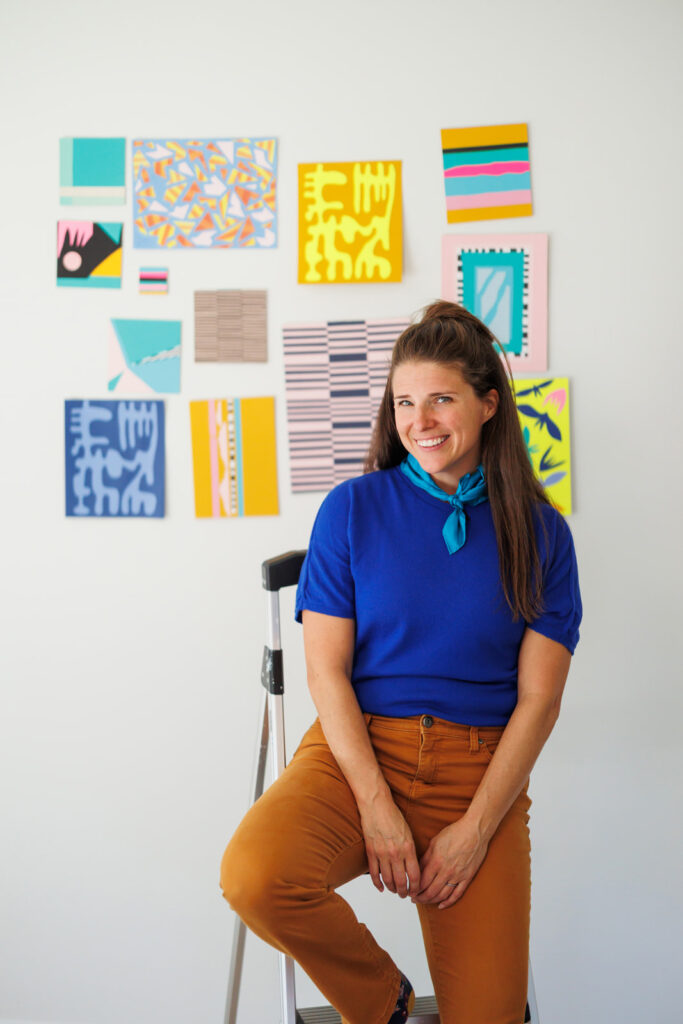
So many designers dream of starting their own business. What finally pushed you to launch something of your own?
Launching this business has been a long, slow process. I was licensing and selling artwork and designs to companies for their products and commissioned projects, while also experimenting with Print On Demand and selling products myself. I found the On Demand production model to be fantastic for designing for a niche market and designing with sustainability in mind. But I was not enamoured by the products available to sell; most were made with acrylic and polyester materials and manufactured overseas, where shipping took weeks and could potentially be held up in customs or subject to evolving tariffs. I became determined to create products that were made in the USA with materials that were less detrimental to our environment and our health. Many years of saving money, researching manufacturing, and experimenting with concepts went into developing a brand of my own.
Blythly comes from “blithe” — joyful, light, at ease. How much of that name is philosophy versus aspiration? Did you have to work to get there, or has that been your relationship with making from the start?
The name Blyth is my former middle name with the Scottish spelling, before I legally changed it after marriage. This adjective is central to my ethos of living, so it is both philosophical and also aspirational for my brand. I naturally buzz with high vibration energy and have to work really hard to operate at a level of ease and neutrality with my energy and emotions. It felt like the perfect concept to describe a brand that is all about expressing joy with color while also being able to feel at ease knowing that the garments you are wearing are made ethically and with better materials. The warm, buoyant glow one experiences after a lovely day at the beach is the exact feeling I want customers to experience wearing Blythly.
Fast fashion frustration is what sent you toward founding Blythly. What was the specific moment, or the accumulation of moments, that made you think: I need to make this myself?
When I moved to New England after many years in places with very warm climates, I had to purchase lots of apparel and products to survive the five seasons of New Hampshire, I barely owned socks! The sweaters I acquired were terrible. I kept noticing how they would stink no matter how I washed them, they would pill, they would generally look terrible after one season of wear. I found it hard to find fun colors and really hard to find choices that were not made with acrylic and polyester. I was raised on a farm by hippie parents who instilled a love of the environment and nature and a distrust of synthetic materials. I have always closely followed research relating to the toxicity of plastics on our hormones and environment. The disappointment in my purchases and worries about health sent me down research rabbit holes to learn more about fibers and manufacturing better products.
I was also very aware of the extreme labor practices that happen with fast fashion and wanted to be sure that if I was selling a product, it would be made as ethically as possible and created with well-regulated materials and made to last for generations.
You work across textile design, screenprinting, and paper collage. How does that cross-disciplinary eye show up in knitwear? What do those other practices give you that a knitwear-only background wouldn’t?
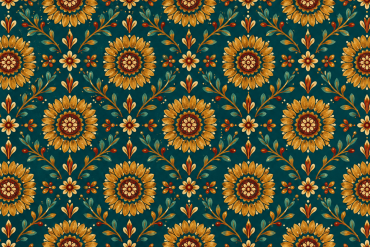
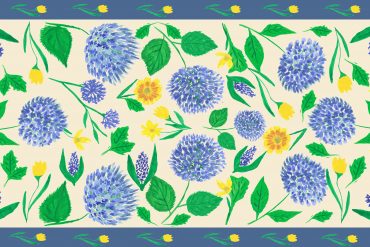
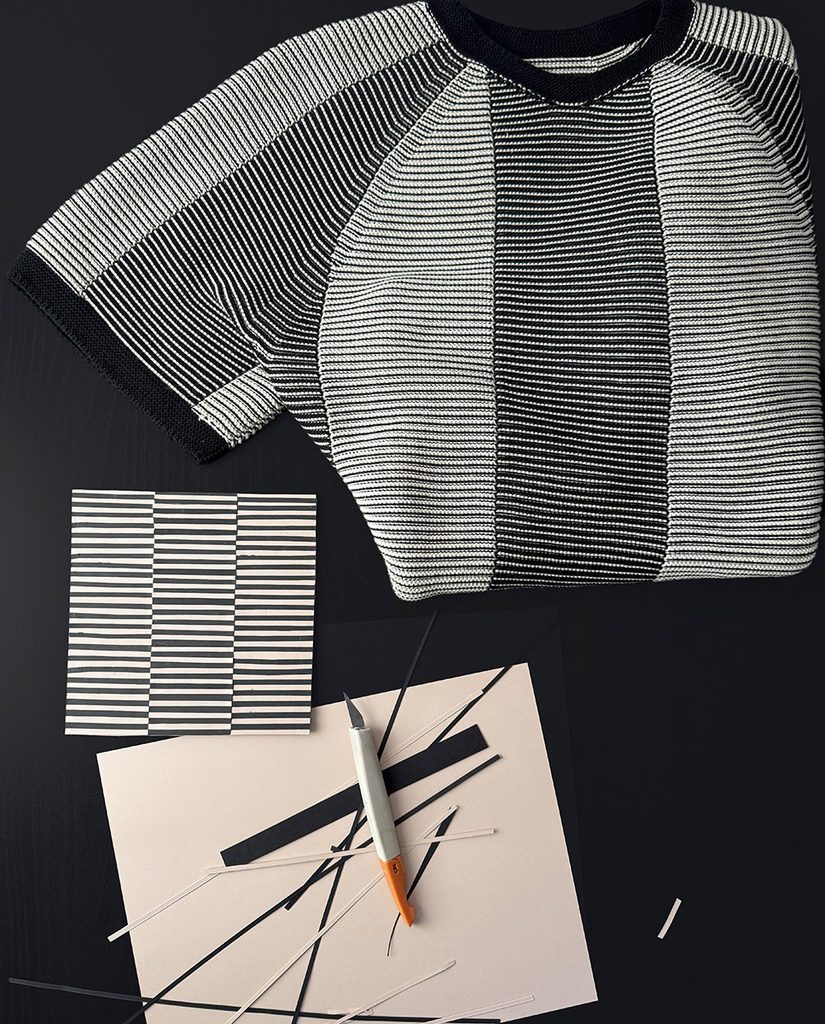
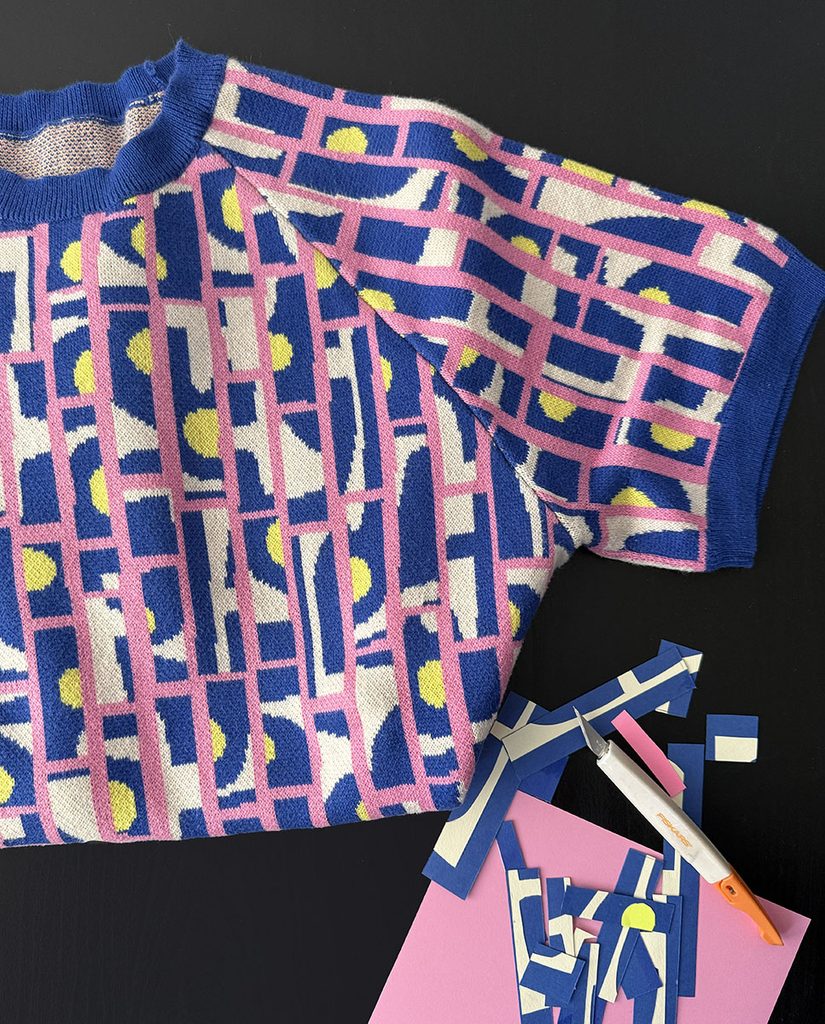
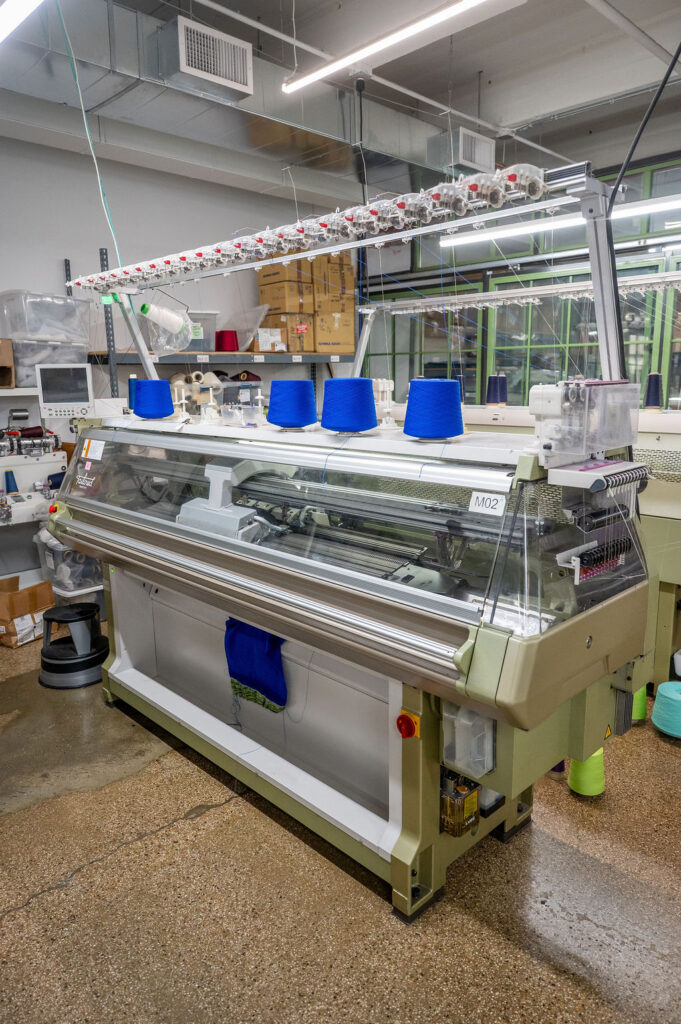
Color has always been the impetus to create for me. I have always loved to work with color limitations as a design parameter, which are a natural part of screenprinting and knitting. My manufacturing process uses 3D knitting technology, where the entire garment is knit on a single machine in about an hour. It is fantastic for reducing fiber waste, the need for human labor, and is excellent for an on-demand business structure. Designing knitwear inspired from paper collage has pushed the boundaries of what has been made with this technology. My concepts don’t always work out, as the machine has limitations to how it can knit. This experiment I made with a jacquard knitting machine (below on the right) was not possible to execute on a 3D machine. Colorblocking and striped concepts have worked well, like the image on the left below.
Color is clearly the spine of Blythly — warm, cool, neutral, earth families, a Color Quiz, the whole “Live Loud” ethos. Walk me through how you actually develop a colorway. Where does it start?
The brand is definitely big on color. One of the advantages of creating apparel after it is ordered is being able to take larger risks with color choices. I do not have to hold inventory, hoping the bet I made on a specific color pays off. How often have you seen sale racks stuffed with apparel in a color that did not sell as expected? These products ultimately end up in landfills. A larger vision I have for Blythly is a brick and mortar retail shop where customers can order and customize their apparel, picking from a rainbow of hues. You could get scanned for sizing, customize your garment, and machines would begin knitting your garment, which could be picked up later or sent directly to your home.
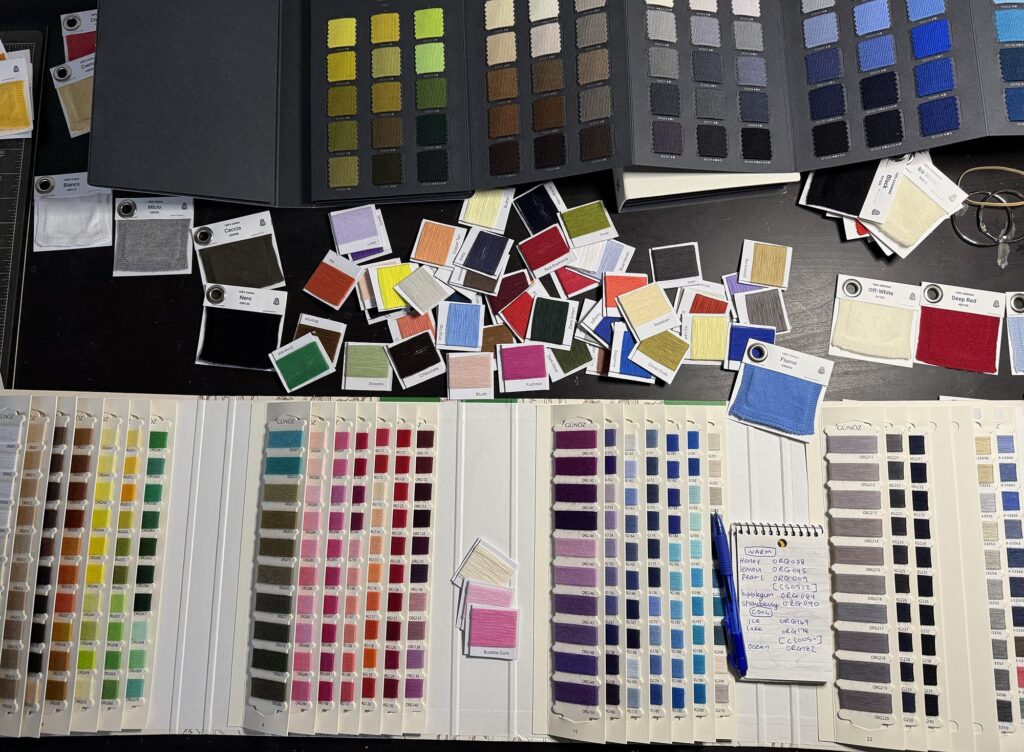
The core colors for the brand come back to this ethos of feeling buoyant and blithe after a day at the beach. I lived in Miami for many years and developed this color palette around Art Deco architecture and tropical water colors, which included pinks, teals, aquas, and blues. They pair so well with golden yellows, browns, and creams. I also included neutral wardrobe staples like grays, olive green, and black. I definitely research color trends on WGSN and Pantone, but right now trends feel so overwhelming and almost irrelevant, as we have reached such a fever pitch of opinions and content sharing. I want clothing that you can wear for years, so I have been focused on designing classic garments that inject color in fun ways, that can hopefully withstand the ebb and flow of fashion trends.
GOTS-certified cotton, RWS wool, plastic-free packaging, 3D knitting designed for upcycling — that’s a lot of intentional decisions. Which one was the hardest to commit to, and why?
One of my biggest goals starting this brand was to make it entirely free of plastic. I knew it would be hard, but also worth the effort. At this time, I am about 99.97% there. It would be easy to backpedal on this commitment to cut costs and quality, but I believe consumers need choices that limit plastic not only in what the products are made of, but how they are shipped. There are so many places where plastic shows up. I had to design or seek out buttons, tags, labels, strings, and packaging made without plastic. The fiber part was a little easier; I chose to source fibers from Italy that follow some of the strictest certifications for fiber manufacturing, GOTS (Global Organic Textile Standard) for organic cotton and RWS (Responsible Wool Standard) for wool. What is currently the hardest challenge is finding a replacement for the minuscule but necessary amount of Lycra that is at the neck and hems of the sweaters to allow for stretch and recovery. Hopefully that can be tackled in the near future to get me to 100% plastic-free!
You’ve got a clear future roadmap: plant-based dyes, other natural fibers, plant-based Lycra. How do you decide what order to pursue those in? Is it customer-led, supply-chain-led, or something else?
The order would be based on supply chain opportunity. My next phase of research is definitely trying to source more fibers from the USA. I have experimented with natural dyeing over the years and taught classes with indigo dyeing for over a decade now. There is such super exciting research coming out right now for dyes made with mushrooms, bacteria, and plants. I will continue to follow these developing possibilities for my supply chain. Something like the plant-based Lycra is just now coming to market, and it can be hard to source small amounts when dealing with global powerhouse corporations. Another aspect I am researching is the circularity of fiber production and recycling. I intentionally designed all of my garments from a single plant based fiber so they could be easier to recycle into useable fiber again; this is known as circular design. Fiber recycling is another area of textiles and fashion that is rapidly evolving, especially in Europe.
A lot of Pattern Observer members dream about launching something tangible of their own. What’s the one thing you’d tell them to figure out before they start, and the one thing you’d tell them to stop waiting on?
Great question! Before starting, have a clear vision of a problem you are trying to solve and the audience that you are helping, then research, research, research!
My grandfather would always say, you’ll never do it any younger. There is never a great time to start something monumental, and the fear of failure can create immense pressure; I think even more now that we are in a time when everyone can watch the outcome play out online. I would not wait to have all the answers or every detail in place. You have to be flexible with every decision, and if you are waiting for the perfect solution or to be at 100% of your design goal, it could be years before lift-off, and you might never start.

Last one: the Color Quiz on the Blythly site is really fun. What’s your own color family, and does it actually match what you end up wearing?
My color family is Cool! I think Warm probably comes close because I love a maximal, vibrant environment. But I do naturally gravitate to shades of blue and green for clothing and my favorite color is violet. Of course, I own a lot of neutrals too because I have always followed a rule of when in doubt about what to wear, go for black. The color quiz is designed to help you pay closer attention to how color affects your mood and help you consider colors you might not have in your wardrobe but are naturally drawn to. It is not a color season quiz that tells you what you should and should not wear; I think color should be fun and expressive, not limiting and rule-based. A new color I have embraced recently is a caramel brown, it complements colors in my wardrobe I already own so well and has made getting dressed easier.
What to Take From Amanda’s Story
She started with a problem, not a product. Bad sweaters, plastic-heavy materials, and long overseas shipping weren’t just annoyances. They became the brief.
She took her time and still started. Years of saving, researching, and experimenting came first. But she didn’t wait for perfect. As she says, you’ll never do it any younger.
Her skills carried over. Color limits, screenprinting, paper collage, and years of licensing work all show up in how Blythly looks and how it’s made.
If you’re a textile or surface pattern designer who dreams of making something tangible, you don’t need every answer today. Name the problem you want to solve, learn who you’re solving it for, and research your way to the next step.
Visit Blythly and Join the Conversation
Take a look at Amanda’s work at Blythly.com, and try the Color Quiz to find your own color family.
Thinking about launching your own product, brand, or collection? Come share it with us in the Textile Design Lab. Tell us what problem you want to solve, and let’s figure out your next step together.