Mid-summer is a great time to step back and ask: what are buyers actually purchasing right now, and where is demand heading for fall? Whether you’re building a licensing portfolio, stocking a print-on-demand shop, or pitching to agents, understanding the market is key to knowing how to move forward.
Here are four trends in the market and ideas for carrying them into future seasons.
1. Needlework Translation
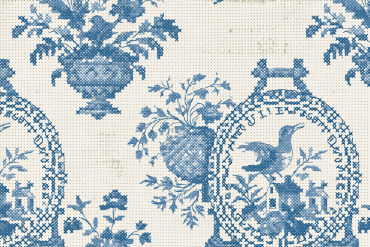
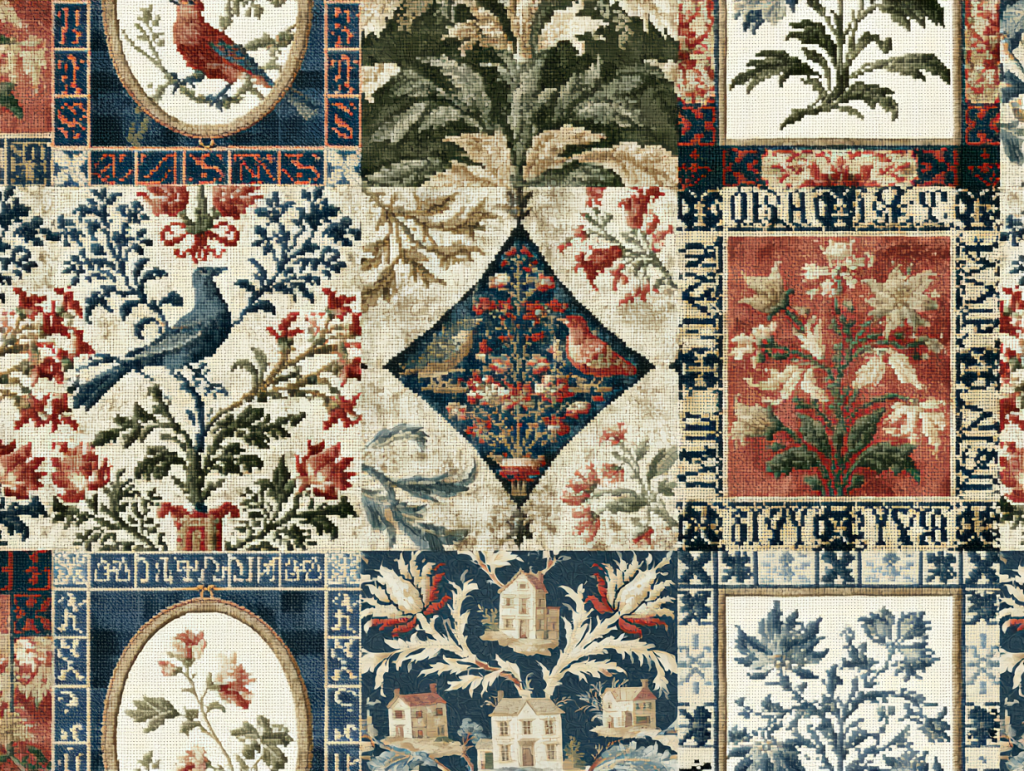
The needlework revival isn’t new, but what’s happening right now is more specific and applicable to our industry: buyers want the look of hand-stitching translated into printable surface patterns. Think counted cross-stitch grids reinterpreted as patterns or graphic designs, embroidery hoops rendered as framed graphics, and sampler-style arrangements with heritage motifs such as birds, botanicals, houses, alphabets, organized on a visible grid.
What makes this trend exciting for designers is that it has strong traction across multiple categories. Spoonflower’s cross-stitch category is a great example of this trend, and needlepoint as a home accent has been called out as one of the defining looks of this year’s interior design season. For quilting designers especially, this is worth paying attention to; the overlap between quilting aesthetics and needlework motifs gives your portfolio immediate relevance in both markets.
When creating your color palettes, lean into traditional sampler colors: aged linen grounds, brick red, forest green, navy, and dusty gold. Avoid overly bright or saturated palettes here; the aged, well-loved quality is key to the trend.
2. Checkerboard and Optical Geometry
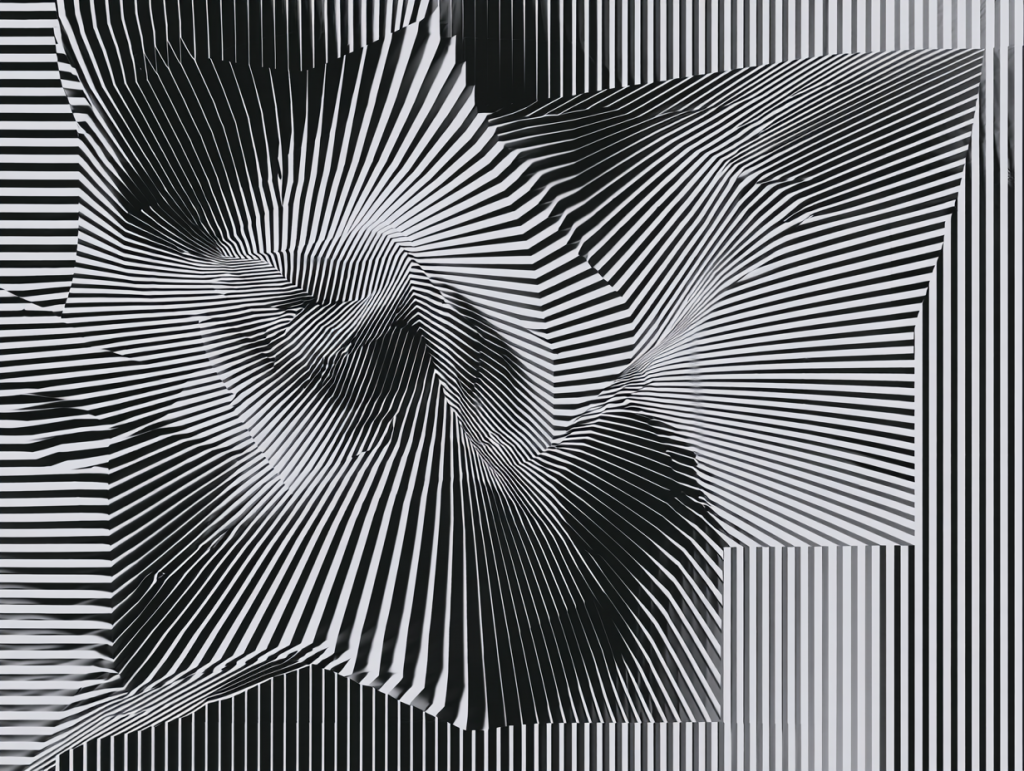
High-contrast graphic geometry is back in a serious way. Checkerboard is the entry point, but the trend extends further: moiré-effect patterns that create the illusion of movement, interlocking diamond grids, and tessellating shapes that play with figure/ground reversal. These designs have a confident, graphic presence that appeals to a younger consumer demographic and travels easily between apparel, home accessories, and printed goods.
West Elm’s Checkerboard Diamond Wool Dhurrie is a great example of this look, and geometric floor coverings and pillows are prominently featured in their Summer 2026 lookbook .
For designers, this trend rewards simplicity. Overthinking the motif misses the point — the power is in the structure and color contrast. Try a classic two-tone palette first (black/cream, forest green/warm white, terracotta/parchment) and let the shapes push the pattern forward to future seasons.
3. Artisanal Woodblock Botanical
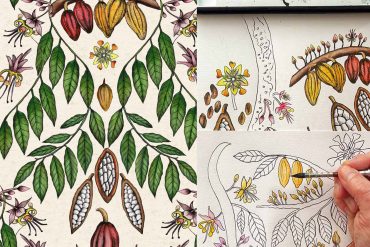
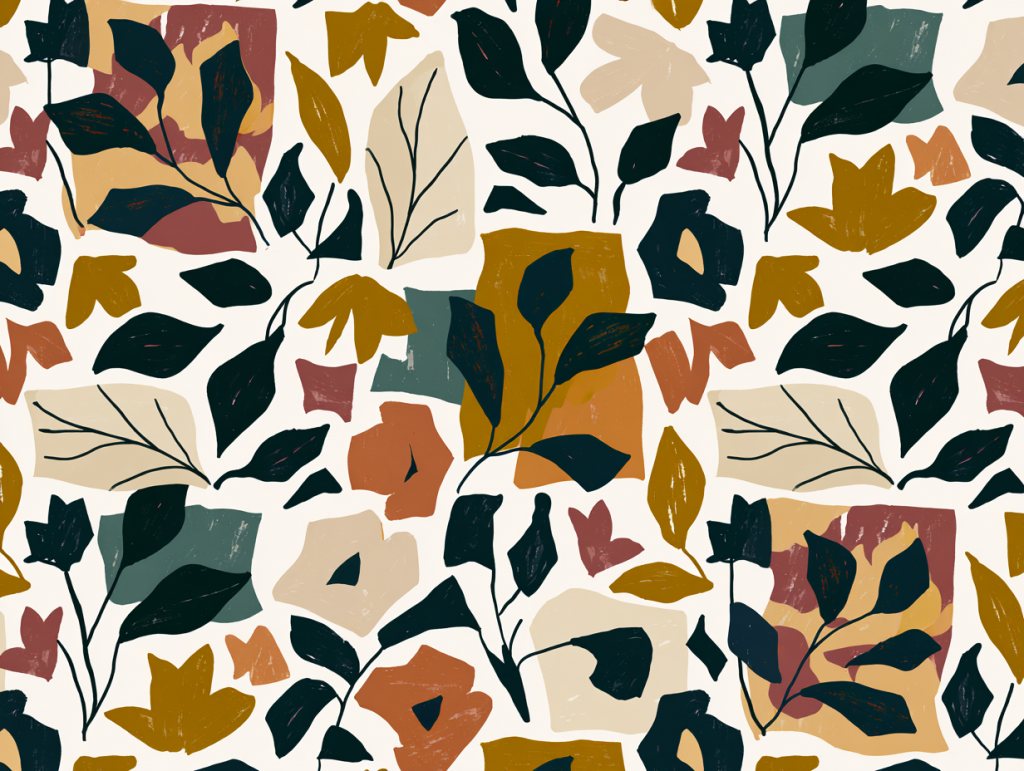
This one feels like a natural evolution from what we discussed last month: buyers want botanicals, but increasingly they want them with process marks, the visible evidence that something was made by hand. Japanese botanical woodblock aesthetics, Provençal block-print traditions, and South Asian hand-block florals are all in this family.
Visually, you’re looking for: slight ink-bleed at the edges of motifs, layered color blocks that don’t align perfectly, a loose irregularity in leaf veins and petal shapes, and earthy-to-warm color palettes. This is deliberate, artisanal imperfection.

For POD, this translates extremely well to fabric and wallpaper. The organic quality reads as authentic and premium rather than computer-generated, which matters more than ever to today’s consumer.
4. Midimalism: Edited Maximalism
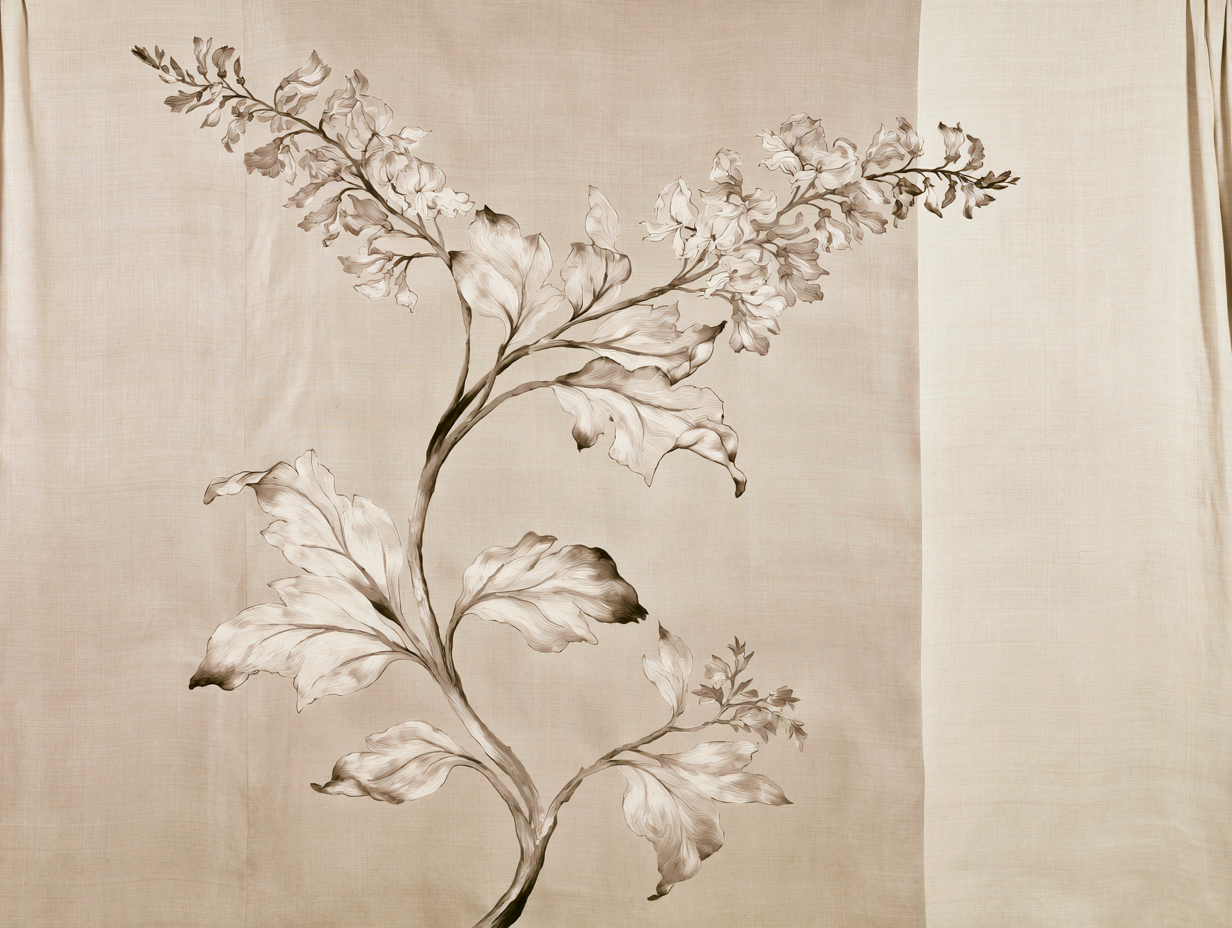
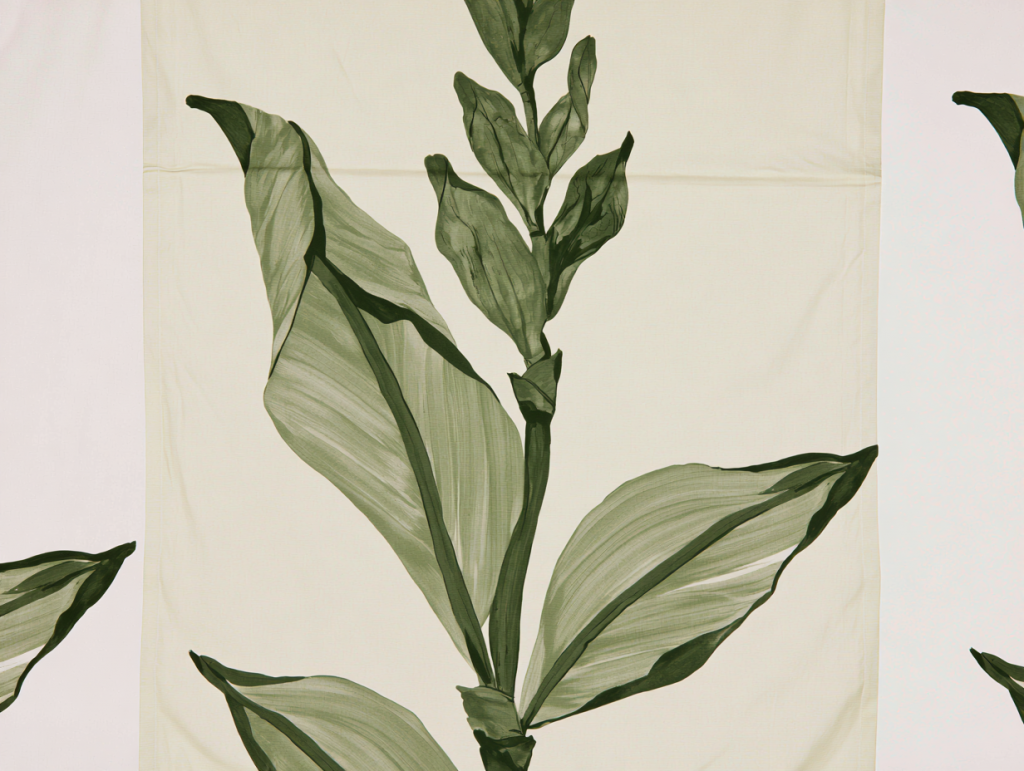
Not everything in the market is more, more, more. The counterpoint to full maximalist density is a quieter approach that still delivers personality: one strong, detailed motif anchored in plenty of breathing room. Interior design writers are calling it “midimalism,” and it’s showing up in exactly the spaces where confident, character-rich patterns live alongside cleaner lines.
Think a single oversized botanical stem on a warm off-white ground. A detailed medallion with generous negative space. Society6’s botanical art category shows consistent demand for this kind of edited, considered design. For licensing into home decor and gift markets, this approach lets your work pair easily with both minimal and maximalist interiors, which makes it a practical portfolio addition.
Warm terracotta, aged cream, dusty olive, and soft rust are the key palette colors.
Stay Ahead of What’s Selling
Designing with trends strategically and building collections that align with what buyers are actively sourcing is a skill you can develop. Inside the Textile Design Lab , we work through exactly this kind of market-aware design process together every month. If you want a community of designers thinking alongside you, we’d love to see you there.