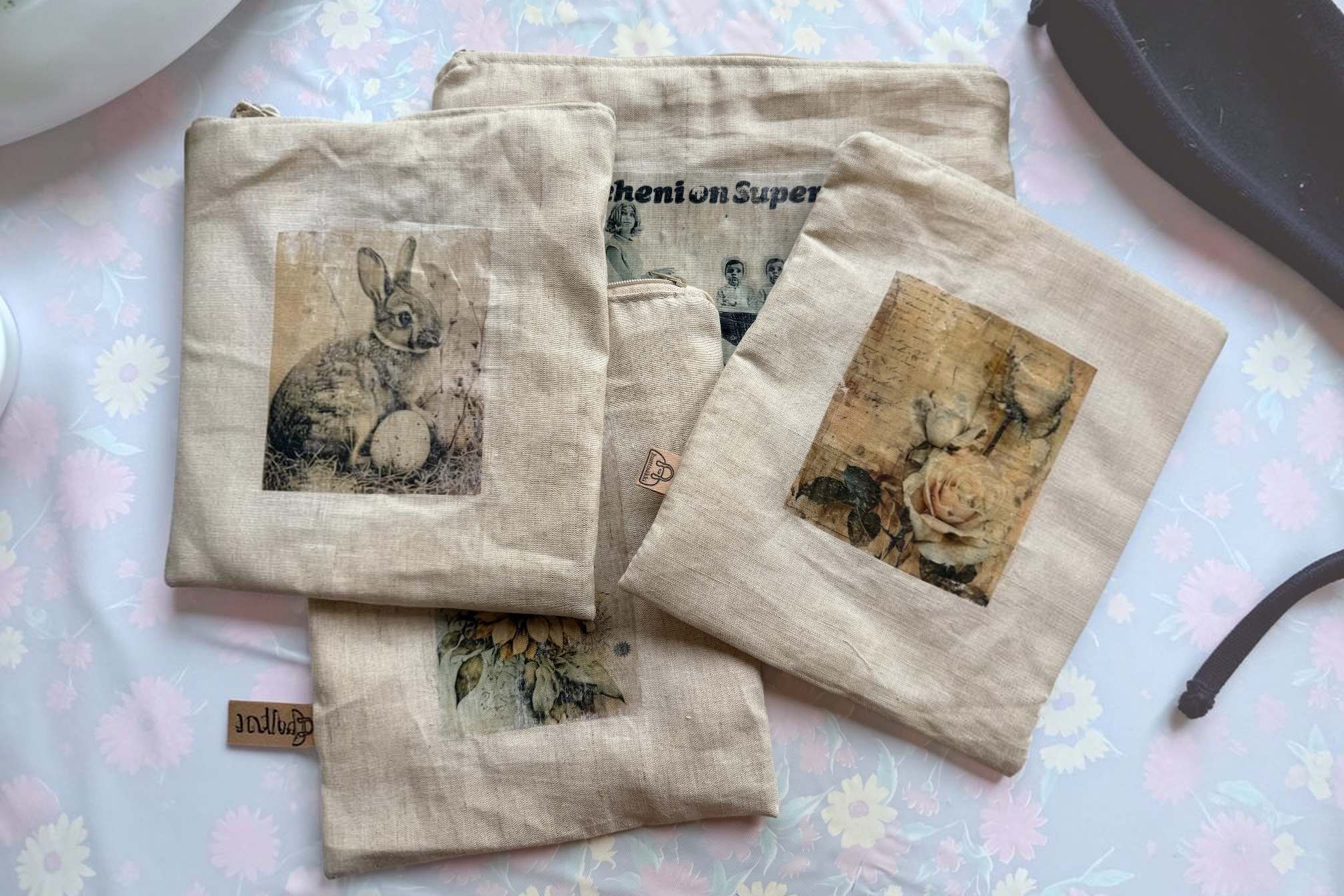
Margit Jussila is the maker behind Juuttisäkki, a Finnish handmade business focused on textile
products, creative reuse, and practical craft projects. Her work explores ways to combine traditional materials, recycled textiles, and accessible techniques to give fabrics new character and purpose. Margit is sharing her wisdom and process of transfering images to linen fabric with us today, welcome Margit!
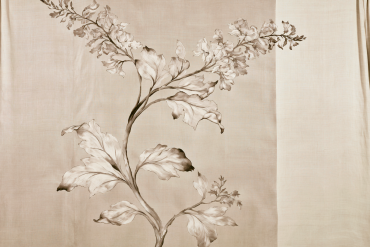
Linen has a character that is difficult to imitate. Its visible weaves, natural variations, and slightly
irregular surface make it interesting even before anything is printed, painted, or stitched onto it.
When I first started experimenting with transferring vintage images onto linen, I approached it
mainly as a practical craft technique. Over time, however, I began to see it more as a form of
surface design. The finished result is shaped not only by the image itself, but also by the texture of the fabric, the contrast of the artwork, the transfer medium, and the small variations that appear during the process. Unlike printing onto a perfectly smooth surface, transferring an image onto linen creates something that feels integrated into the textile rather than simply placed on top of it.
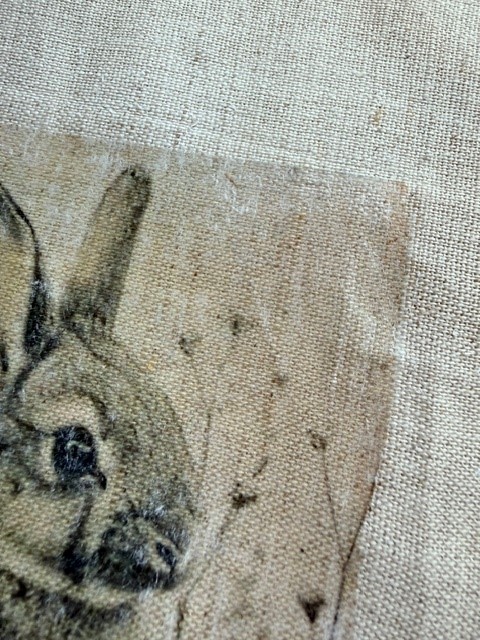
transfer.
Choosing an image for textile transfer
The image is naturally the starting point, but not every image behaves in the same way when
transferred onto fabric. In my experience, images with clear shapes, strong contrasts and recognizable details tend to work particularly well. Vintage illustrations, botanical drawings, typography and black-and-white graphics are especially suitable because they can tolerate some loss of fine detail without losing their character. Very pale areas and extremely fine details may become less visible once the texture of the linen begins to show through. I do not necessarily see this as a disadvantage. When designing for fabric, it helps to stop expecting the finished transfer to look exactly like the original image on a computer screen. The textile itself becomes part of the design. A slightly faded area, softened edge or visible section of weave can make the image feel older, warmer, and more organic.
Why linen creates an interesting surface
One of the reasons I enjoy working with linen is precisely because it is not perfectly smooth. The weave creates a subtle texture underneath the transferred image and changes how the design is
perceived. On a smoother material, the goal may be to reproduce an image as accurately as possible. With linen, I prefer to allow some of the fabric to remain visually present. Natural-colored linen can give vintage artwork a warmer appearance, while lighter linen creates stronger contrast. The weight of the fabric matters as well. Very lightweight linen may be more difficult to handle, especially if the transferred fabric will later become part of a functional object. A slightly heavier linen provides a more stable working surface and can be easier to incorporate into bags, pouches, or decorative textile pieces.
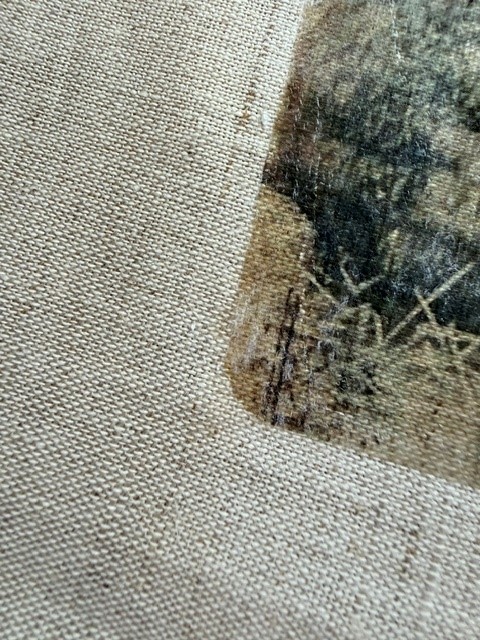
transfer.
Preparing the fabric matters
Preparation has a surprisingly large effect on the final appearance. Before transferring an image, I make sure the linen is clean, dry, and as smooth as possible. Ironing is especially important. Even small folds or wrinkles can prevent the image from making even contact with the fabric. Because linen wrinkles naturally, taking a little time to prepare the surface can make the transfer much more consistent. I also consider the placement of the image before applying any transfer medium. If the fabric becomes a pouch, bag, or another sewn object, the future seams and folds need to be taken into account. An image that looks perfectly centered on a flat piece of linen may end up too close to an edge once the piece is sewn. Thinking about the finished object before transferring the image makes it much easier to build the design around the final use.
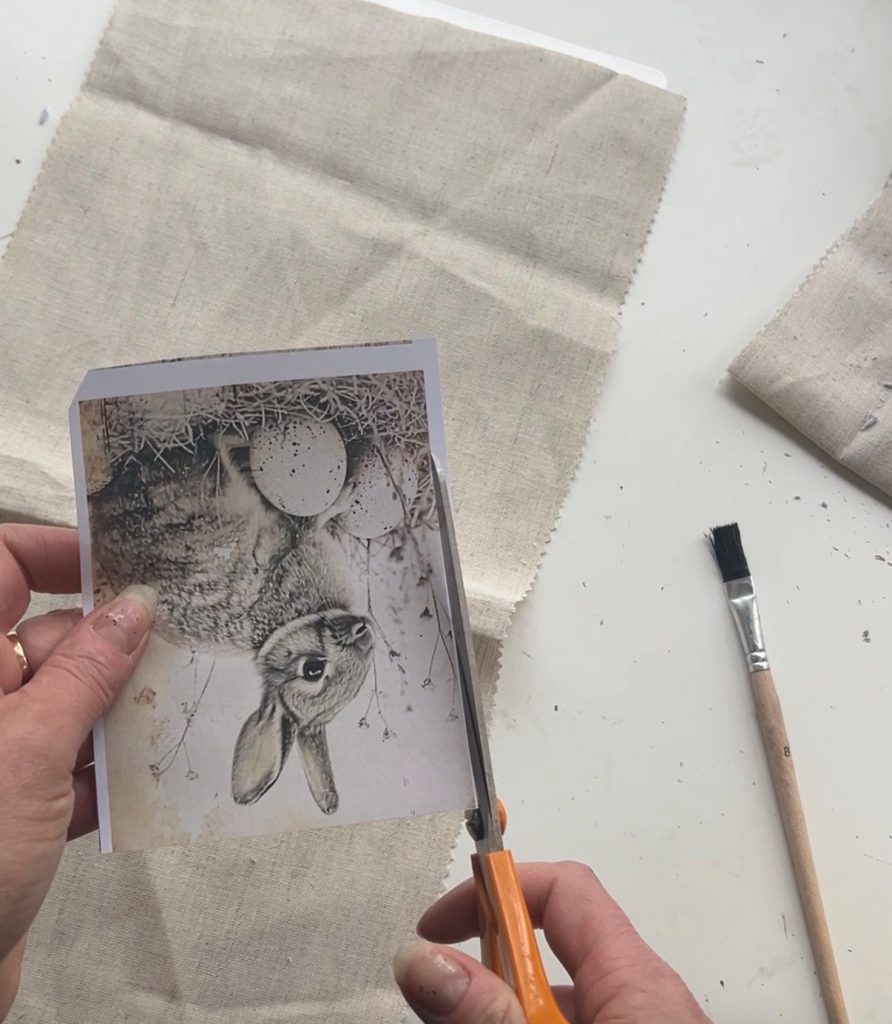
fabric.
The transfer is part of the design process
The basic process involves applying a transfer medium, positioning the printed side of the image
against the fabric and allowing it to dry thoroughly before gradually removing the paper.
But small decisions during this process influence the final surface. The amount of transfer medium, how evenly the image is pressed onto the fabric and how patiently the paper is removed all affect the result. One of the most important lessons I have learned is not to rush the drying stage.
It is tempting to check the image too soon, especially when experimenting with a new design, but
allowing the transfer to dry thoroughly makes the paper-removal stage much easier. When removing the paper, I prefer to work gradually rather than trying to reveal the entire image at
once. The process almost becomes a continuation of the design. Some areas appear stronger, others softer, and the image slowly emerges from the texture of the fabric.
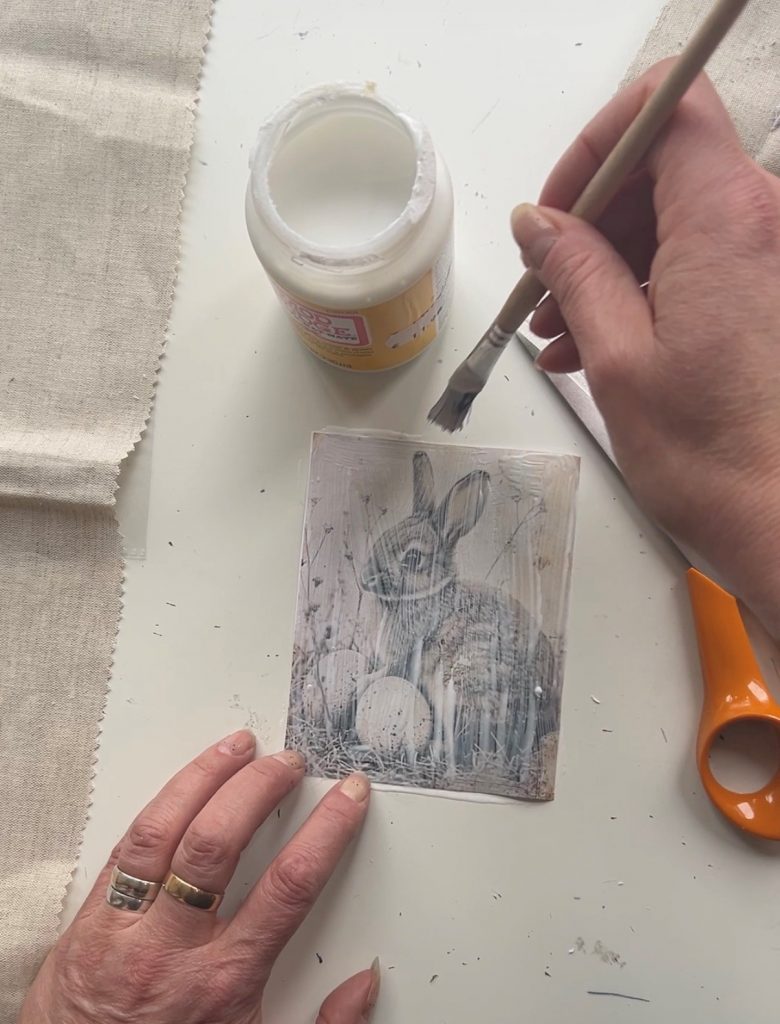
image and the fabric.
Imperfection can become part of the visual language
One of the things I like most about this technique is that small imperfections can actually improve
the result. A transferred image does not necessarily have the clean precision of a digitally printed textile. Edges may soften. Small areas may disappear. The weave of the linen may remain visible through parts of the design. For some styles this may be unwanted, but for vintage-inspired or handmade work it can add exactly the character I am looking for. Instead of seeing every irregularity as a mistake, I began looking at the overall composition. Does the image still communicate what I intended? Does the texture complement the artwork? Does the finished surface feel interesting both from a distance and close up? Those questions became more useful than asking whether every detail transferred perfectly.
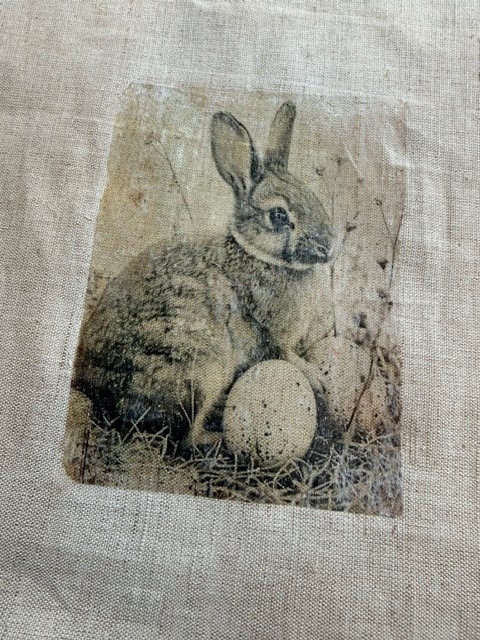
the final step.
Designing beyond the transfer
Another interesting part of the process is that the transferred image does not have to be the final
step. Once the fabric is completely dry, it can be combined with other textile techniques.
Stitching can be used to emphasize parts of an illustration. A botanical image could be combined
with hand embroidery, while typography could become part of a larger patchwork composition.
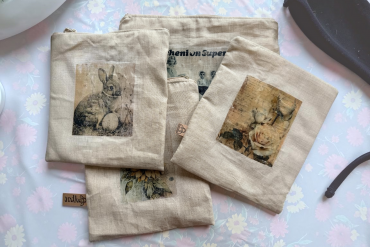
The transferred fabric can also be turned into functional objects such as small bags, pouches,
decorative panels or textile accessories. This is where image transfer becomes particularly interesting to me as a maker. The technique creates a surface that can then become raw material for another project. The transferred image is not simply decoration added to a finished object. It can be considered from the beginning as one element within a larger textile design.
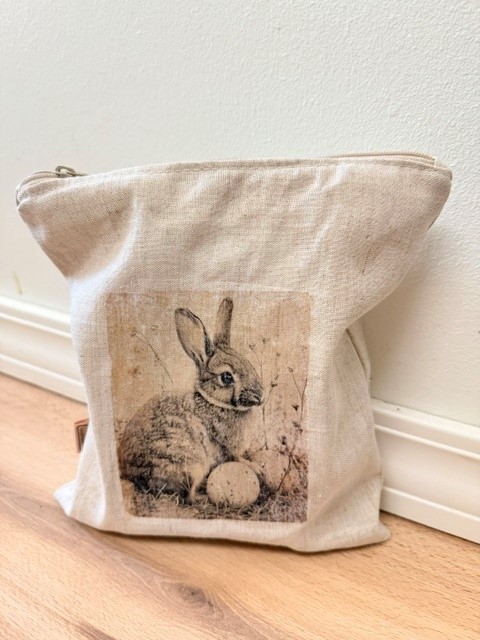
the final step.
What I have learned from working with this technique
My biggest lesson has been to work with the textile rather than trying to force it to behave like
paper. Linen has its own texture and character, and allowing those qualities to remain visible usually creates a more interesting result. I have also learned the value of testing. A small piece of the same fabric can reveal how strongly an image will transfer and how the fabric reacts before committing to a larger piece. Image choice also becomes easier with experience. Some designs that look beautiful on screen may lose too much detail on fabric, while simpler images can become unexpectedly striking once combined with the weave of linen.

Most importantly, this technique has reminded me that surface design does not always need to
produce identical results. Small variations can make each piece distinctive. For handmade textiles, that individuality can become part of their appeal.