June 18, 2013

Behind the scenes at basik 855

The basik 855 weaving center in Takeo, Cambodia.

Today we are pleased to share an interview with Leigh Morlock, the Creative Director behind basik 855, a Cambodia-based brand known for their bold handwoven textiles and chic accessories. Read on to learn more about the workings of this awesome socially responsible company.

What made you decide to start this business? Why did you choose to base the business in Cambodia?

Our weavers and artisans inspired our business. When the original cofounders (including myself) first visited Takeo, we were struck by the poverty in a region where nearly everyone is trained in an intricate and complex art form.

The initial challenge was to see if we could connect our artisans, who are masters at what they do, with a global market. We realized we could when our sarongs (as Push Pull Cambodia) were included in the Wanderlust for Madewell Collection in spring of 2010.

There was never any question that our business would be based in Cambodia. This is where our artisans are. This is where we learned first-hand about ikat. Cambodia has captured a very special place in each of our hearts.

What is a typical workday like for you? What are your favorite parts of the job and what do you find most challenging?

Oh, this question is always a bit tough! Typical depends on what we’re doing and where we are in the design and development of a season.

I’m a night owl, which actually has benefits when you’re working across the world from where you’re selling. It means that there’s usually overlap between when I’m online and when our partner in NYC is available.

Since we are an intentionally small company, there’s a lot about my workload that is atypical for most Creative Directors (but probably relatable for most entrepreneurs). For instance, in addition to my design and creative work, I’m also the keeper of expenses and accounting, as well as production coordinator for our outside sewing vendors.

My absolute favorite thing to do is create a seasonal trend concept. This allows me to exercise my trend research muscles as well as a bit of fashion intuition. Plus, it’s always an amazing day when we present it to our Khmer design team.

The most challenging parts are usually the ones that require the most flexibility. Like, a phone call from the bank requesting I drop everything and go to the local branch because my signature on a check is slightly different from what they have on file, therefore they need me physically present to cash a check I’ve written.

Could you tell us more about the process of designing one of your collections and how you collaborate with the Khmer design team?

This is one of my absolute favorite parts of what we do. After scouring inspiration and design trends, I create a presentation for our Cambodian design team outlining pattern trends for the upcoming season, important color palettes, and key moods.

For Heirloom (our Fall 2013 collection), we identified dark romance, urban prairie, and graphic overload as the key themes for the season. From there, we looked at specific pattern trends, including zebra, brocade, houndstooth, herringbone, lattice-work, ditsy, quirky polka dots, interrupted chevrons, honeycombs, diamonds, and triangles.

In Heirloom, we have two color palettes. One was derived from a photo of a black & white boat floating in a lake with a very dark sky. It evoked the idea of midnight while still being graphically surprising. Starry Night with a touch of oxblood inspired the second palette.

After our design presentation, the designers have two weeks to sketch patterns based on everything we discussed. Usually, they each sketch 9-12 new designs, which we review as a team at our weaving center. At this point, we choose 10 to 15 to proceed developing.

This is the part that I find most mind-boggling – our designers use the sketches and experiment with how to tie each pattern into the cotton threads that will eventually become a woven piece of fabric. From what I can tell, there are equal parts geometry, intuition, and artistry involved in this stage.

From here, we continue refining the design and execution until we have a final pattern. The process of developing the patterns and colors for a season takes three to four months.

Where do you draw inspiration for your patterns and colors?

My former boss and mentor called me a Creative Dumpster Diver, which is absolutely true. I am an inspiration-hound. In addition to using TrendStop, a trend forecasting service, I am an avid blog reader.

Here are a few of my recommendations: Maquette, The UltraBright, Pattern Observer (imagine that!), Patternbank, Plenty of Colour, Blog.Stylesight, Stylesight’s Tumblr, BOOOOOOOM!, Pattern People, and Trend Land.

Could you talk a bit about being a socially responsible company and what that means to you?

One of the reasons we started basik 855 is because we wanted to do business as we think it ought to be done.

What does this mean? First, we pay our employees a fair living wage that they wouldn’t receive in garment factories.

Beyond a living wage, we believe in offering a competitive benefits package that includes medical reimbursements, annual eye care exams, public holidays, paid time off, and maternity leave.

When we outsource work, we collaborate with like-minded partners. We work with sewing enterprises that employ people from vulnerable backgrounds to develop their skills in order to build better futures.

We’re not a charity, but we respect our artisans. This simple vision has guided us from the very beginning.

What would you consider to be your most proud achievement/greatest success so far in your business? What are your goals for the future?

Heirloom, our newest collection, is by far our proudest achievement because our Khmer design team created most of the patterns. Our goal has always been to promote a renaissance of ikat and foster the creative talent that exists here in Cambodia.

After working together for a few years, we are at a place where we are practicing this daily. The designers are beginning to understand my Western aesthetic, and what our customers want to buy. I’ve become familiar enough with the process and our designers that I know when I can push creatively, and when a request is truly impossible.

Do you have any advice for aspiring textile designers hoping to build successful businesses of their own?

Since I came into textile design in an unexpected way – a theater director turned creative assistant at a handbag company – I would say, don’t let a lack of experience or education get in the way. If you have a degree or coursework in textile design, then I am mildly jealous. You are one step ahead of the rest of us!

However, one of the most important things I’ve learned since moving to Cambodia and embarking on this business is that there is always a way. There are great mentors, courses, and (often free) resources available to get you from where you are to where you want to be.

In fact, you might just see me in the August offering of The Ultimate Guide To Repeats where I’ll be augmenting my own knowledge of this amazing industry we all love!

Thanks for sharing Leigh! You can see more from basik 855 on their website, or get involved and help launch their Fall 2013 collection by visiting their Kickstarter page. There are 13 days left to meet their goal so spread the word! -Chelsea

June 17, 2013

Children’s Trend: Making Marks

Post by Claire Carey. Images via: Harvest TextilesMini and MaximusWatietsESP No.1Delphine ChanetMolo from Yellow LollyNoe & ZoeSoft GalleryHarvest Textiles

This trend story celebrates everything that children love about mark making. Simple, bright and free. Painterly textures are playful, bold and simple.

June 14, 2013

Featured Designer: Jane Farnham

Hello there! Without further ado, I would like to present the Vintage Peach collection by Jane Farnham, a surface pattern designer based in the UK.

“I wanted to design a collection that had a vintage feel to it with the shapes and colour palette, and had been thinking about using the aqua and peach palette for a while.  I take a lot of my inspiration from nature, old china and fabrics and am often looking around charity shops, antique markets of just walking round our local park and taking photographs of everything and anything that interests me. I draw and do mindless doodles to see where it leads and scan the image into my mac and use a mixture of line drawings with computer illustration to create my finished designs.”

If you are looking to snag a few of Jane’s adorable patterns you can visit her Society6 shop, where she sells prints, cushions, stationery, iPhone cases and iPad skins. Jane is currently looking for representation and is available for commissions and licensing. Please visit her website for information and to see more of Jane’s lovely work.

Have a great weekend!

June 13, 2013

Interview with Jane Lewis of P&B Textiles

I could not be more thrilled about today’s post!

I know many of you are interested in the quilt/ craft fabric marketplace, so last week I sat down with Jane Lewis, Art Director of P&B Textiles, to ask her a view questions. We cover a vast array of important topics including:

1. What are manufacturers looking for in patterns or collections? What makes a collection irresistible to you? What would you like to see more of in quilting fabrics?

2. When you are making the decision on whether or not to purchase a print, how much does your decision depend on if it is in repeat or not?

3. Is there anything that is “just not done” with a fabric meant for quilting- sort of a quilter’s taboo?

4. How and when do you like to receive submissions? How many collections should we have in order to make a submission?

This interview is part of Pattern Industry Month, celebrating the launch of our industry-wide survey. If you are a pattern buyer, agent or designer please take a few minutes to complete this important survey. By doing so, you’ll have the chance to win A Wacom Intuos Tablet, a Business Coaching Session and more!


June 12, 2013

Street Patterns: Tile Print

Post by Victoria Snape. Images via: (Top row left) Helen Rawlinson, (2nd row right) Cassa studio, (2nd row left) Cassa studio, (3rd row right and left) The gifted hand, (Bottom row right) Heidi Kind Finds

June 11, 2013

3D Patterns and The Sugar Lab

It is Pattern Industry Month here at Pattern Observer, in honor of our 2013 Pattern Industry Survey. If you haven’t had a chance to fill out the survey yet, be sure to head on over to the survey page and tell us about your experiences in this industry!

This month we are sharing the work of some seriously talented designers, and diving into all the incredible ways in which patterns can be used. I am amazed daily by the new and inventive ways designers find to use patterns in their work. For many of us in this industry, our designs exist in two dimensions, but technology is beginning to open up the possibilities to include new ways of integrating pattern and 3D forms. One such technology is the recent explosion of 3D printing. The possibilities of 3D printing are seemingly limitless, and today’s interview will shed some light on an exciting niche in this burgeoning industry. Let me introduce you to The Sugar Lab, a Los Angeles-based design firm run by my dear friends, Liz and Kyle von Hasseln. The images you see here are edible–they are created with 3D printed sugar! Read on to learn more about their awesome work.

Tell us a bit about The Sugar Lab. What is a typical day like for you in the studio?

We run The Sugar Lab out of our live/work space in Silver Lake, CA. Kyle and I spend most of our day sitting next to each other at a long built-in plywood desk, hunched over our trusty MacBook Pros. All of our work is custom, so a given day really depends on who we’re working with at the time, and where we are in the process. Each project starts by talking to a client about what they’re excited to see in sugar. After some brainstorming and messy hand sketching, we work to translate our ideas into 3D digital models. The modeling process is fairly involved, so that’s how we spend the largest percentage of our time (hence the hunching). When everyone’s excited with the concept, we’ll do some test printing to make sure the geometry works well in sugar, and then we’ll start to print the final pieces. 3D printing in general is kind of a magical process, so it’s always fun to see the geometry emerge in sugar, after considering it on the screen for so long.

Could you tell us about the process of printing a sugar model?

If you’ve ever made frosting and left the mixing bowl in the sink overnight, you know that moistened sugar gets quite hard. That’s the underlying concept of 3D printing with sugar. We use a mixture of water and alcohol, applied very precisely in a layer-wise manner, to selectively wet and harden the sugar substrate. The process is fundamentally similar to other 3D printing applications, we’ve just optimized the process for resolution and strength with sugar, rather than with a standard 3D printing material.

 Are there any limitations to what you can create due to the properties of sugar? How does the material influence the way you design?

There definitely are design limitations. Sugar isn’t as strong as 3D printed plastic, for example, prints that are too top heavy could break under their own weight. Our backgrounds in architecture have helped us to develop design instincts for integrating structural and facade elements into single 3D printed sugar sculptures. There are also more secondary design elements related to 3D printing sugar like color, taste and surface texture that come into focus when you work with sugar. People have expectations about what food looks, tastes, and feels like, and its really important to hit those notes, otherwise you have a cool design, but it might not look like dessert.

What made you decide to use sugar?

It was your birthday!! Chelsea, I should probably explain, is Kyle’s brother’s girlfriend and our great friend. A few years ago, when Kyle and I were still in grad school, Chelsea’s birthday was coming up and we really wanted to bake her a cake, but we didn’t have an oven in our tiny Echo Park apartment. So we decided to try to 3D print a cake for her, instead. It took some trial and error, during which we missed Chelsea’s actual birthday (sorry Chel!), but we managed to print a simple cupcake topper that spelled out ‘Chelsea’ in cursive sugar. She loved it so much that we started seriously considering how interested other people might be in 3D printed sugar. When we graduated, we decided to start a mini design firm for 3D printing custom sugar.

What would you consider to be your greatest achievement so far in your business?

The most exciting project we’ve tackled yet is probably one that we’re working on currently–we’re very excited to be collaborating with some seriously talented cake artists at a well-known bakery in Hollywood to design a four-tiered wedding cake with a 3D printed sugar cake-stand, and 3D printed sugar-tiers supporting cake tiers. It will be a traditional cake silhouette in which sugar plays anything but a traditional role. That’s an exciting part of 3D printing sugar for us–transforming sugar into a structural, sculptural medium that can start to define the form of the food instead of the other way around, and even to support it structurally.

Do you have any advice for designers who are just starting out and looking to find their niche in the design world?

We got some really good advice from one of our professors once. She told us that the key to getting satisfying work as a designer is to just pick something–anything–that isn’t already a huge design category, and just start designing that.

You can see more from The Sugar Lab at their website or Facebook page. And for more 3D inspiration, including recent runway images, check out our 3D Trend board on Pinterest. -Chelsea


June 7, 2013

Featured Designer: Adi Ofri

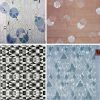
Breathtaking, exquisite, jaw-dropping….these are all the words that were running through my head when I first saw Adi Ofri’s work. She creates beautiful patterns as well, but I thought many of you would find these unique pieces particularly interesting. Adi is from Israel and graduated from the Shenkar College of Engineering and Design in 2011. The pieces you see above are entitled Drawn Lace and were part of her final collection.

“My aim was to create a new lace, to innovate by using embroidered surface and by translating my free hand drawings in to a new kind of laced surface. Not by simply translating my drawings into print and pattern, but creating a textile using the idea of pattern and traditional print, on a none printed textile surface.

I am constantly practicing translations.

If it’s from one language in to the other, from one material to the other or from one dimension to second and third. It’s a long interest of mine, the question what changes from one to the other. How can you preserve the same values of the imagery and still produce in the end process something completely different visually.”

To see more of Adi Ofri’s work please visit her website or blog.

If you have a moment please take our 2013 Pattern Industry Survey and share it with any pattern buyers, clients and agents who you know! A big thanks to the over 400 of you who have already participated. This is a true community project and it means the world to me to see everyone pitching in. Lots of love! – Michelle

June 6, 2013

Monthly Vignette: May 2013

The May vignette is here! Our monthly vignettes provide a re-cap of the previous month’s featured designers, street patterns, interviews, and more. The Pattern Observer youtube channel is where you will find all of our past vignettes, and you can subscribe to the page to keep up on our latest videos. To learn more about any of the designers featured in the May vignette, use the search bar on the right or just scroll down to find their post. Enjoy! -Chelsea

Music by: Wayward Vessel at http://www.waywardvessel.com

June 5, 2013

Street Patterns: Mexican Embroidery

Post by Victoria Snape. Images via: (Top row middle) Aida Coronado, (Middle row right) Aida Coronado, (Middle row left) Mexico Hecho a mano, (Bottom row right) Erica Maree, (Bottom row left) Erica Maree

June 3, 2013

The 2013 Pattern Industry Survey

Today is the day! The 2013 Pattern Industry Survey is now live!

Over the past few years so many of you have emailed us asking for industry statistics to use while developing business plans, applying for grants and loans, or contemplating major business or career decisions. Our answer, “There isn’t anything like this for our industry,” always disappointed me and together, I hope we can produce the resource which we all so desperately need.

Through this survey we aim to empower pattern designers, agents and buyers to make better business and career decisions. We will answer many of the most common questions surrounding the industry and produce a snapshot of how we, the pattern design industry, operates.

Pattern Buyers will learn: how much to expect to pay for existing patterns and custom work, the average amount of time spent developing a pattern, where to find the best new talent in the industry and more…

Pattern Agents and Sales Representatives will learn: where buyers are purchasing patterns, their thoughts on online sales, what buyers are looking for when making purchases and more…

Pattern Designers will learn: what income expectations to have, what sales and marketing tactics other designers are using successfully, how agents and manufacturers want to hear from you, what they expect to see and more…

The results will be shared freely with all who participate through a comprehensive report and webinar presentation. As a thank you for participating and sharing the survey we are offering the chance to win:

* A Wacom Intuos tablet

* A Business Coaching session with Michelle

* The Sellable Sketch Self-study course

* The Ultimate Guide to Repeats Self-study course

The survey closes on June 30th, 2013. Click here to get started.

Thank you for your support! – Michelle

May 31, 2013

Featured Designer: Charlotte Linton

In yesterday’s Sellable Sketch chat a student asked how she could stay inspired and create truly original patterns. “My work looks like everyone else’s…”

My answer was to seek out unique sources of inspiration from her environment or surroundings. Stop focusing on other designer’s work, get out there in the world, sketch, sketch, sketch and watch what ideas emerge.

Today’s featured designer, Charlotte Linton, takes this one step further through her line of digitally printed, hand drawn scarves.

Each season the designer’s fictional muse Ermantrude, “a zoologist with a sharp sense of style and an even sharper intellect, travels the world collecting research and field notes.” These journeys are documented on her blog ‘Ermantrude’s Travels’, and “this rich body of imagery will often lend itself to the scarf designs.”

The gorgeous Scotland collection, which you see above, “is the result of a body of research completed at Cove Park, whilst on a Crafts residency last summer. The research looks in depth at traditional Scottish textile processes including the weaving of Paisley shawls, Turkey red printing and dyeing, and woven shepherds shawls. These more familiar patterns have been combined with the printing style of Kyogen theater costumes from Japan to create cross cultural garments.”

You can see the results of Ermantrude’s travels in the full line of scarves available on Charlotte’s shop and you can read more about the designer here.

Happy travels!


May 30, 2013

Repeat Offfender

One of the highlights of my work day is scrolling through the Pattern Observer student form and getting to know each and every student. I love reading their stories, learning what they hope to achieve and then seeing their kick-ass work. Recently, UGTR student Jordan Graves, posted a video which features her latest collection, Arithmetic. Seeing these two art forms come together in such a beautiful way is so exciting and I am delighted that Jordan agreed to let me share it with you all today. Here’s a little bit about Jordan..

“My whole life I’ve loved math. Figuring out solutions and finding patterns in numbers always felt like a game to me. The Arithmetic Collection is driven by motifs that are three-dimensional visual representations of an arithmetic sequence, where the distance between each layer, where it’s the size or rotation, is equal.

Having studied motion graphics at SCAD, I’ve had an affinity for movement. My collection started out as motion tests, which gave me a quick way to generate different variations of forms to pick from for the collection.

I always knew that I wanted to promote my work through video. If a repeat is four times the width of the thumbnail you have on your website, so much quality is lost whether its from cropping or scaling. A solution is to pan through the entire composition! We’re drawn to patterns because of the rhythm we see in a flat image, and the rhythm of time strengthens it.

All my work, collections, process, and other experiments, are posted on my website www.repeatofffender.com.”

May 29, 2013

Street Patterns: Tulips

Post by Victoria Snape. Images via: (Top row right) Mrs Pomeranz, (Middle row left) Jane Foster, (Middle row right) Aiseirigh Vintage, (Bottom row left) Mrs Pomeranz, (Bottom row right) Erin Flett

May 28, 2013

Children’s Trend: Cute Geometric

Post by Claire Carey, images via: Collected by Tas-Ka, Little Paul Joe, Kriksis, Little Zebra, Katvig, Maan from Liberty, Bensimon X Bakker from My Little Square, Kidscase, Babiekins

Tiny geometric prints in bold primary colours. They look very cute mixed together. A little bit of retro. – Claire

May 24, 2013

Featured Designer: Sisters Gulassa

I have been hearing a lot about the Sisters Gulassa over the past year and I am delighted to finally feature their beautifully vibrant work.

Sisters Gulassa is a brand which specializes in “vibrant, vivacious prints and products for interior, fashion, and any surface that needs high impact visuals.” As their name describes, the brand consists of two sisters living in different countries. Sister Cyrille lives in Vienna, Austria and concentrates on interiors, with the brand’s “unique line of wall runners, wall murals, and floor flowers.” Sister Lise lives in Santa Cruz, California, and concentrates on “design development, trend research and working closely with local clients such as Old Navy, The North Face, Carve Designs, Pottery Barn, Title Nine, Papyrus, Cost Plus and Haiku Accessories.”

“Both sisters design, research and create art. Their backgrounds started with art, fashion and advertising and while working together abroad in Romania, they realized their combined interests could result in a rather vibrant body of work. Sisters Gulassa’s exuberant prints and trademark pattern mix is the result of their collaborations, telling tales of their passions and beckoning others to join their journey.”

They had so many fun projects and images to choose from for today’s post, but I fell in love with these mixed media pieces which can be purchased through Saatchi or Spoonflower.

“We are always looking for exciting projects and products to design for, so please get in touch with us! Our interior products will be shortly available online, and not just in Vienna, so find and follow us on FB and Pinterest for daily inspiration and updates on our shop to be!”

May 22, 2013

Street Patterns: Woven

Post by Victoria Snape. Images via: (Top row right and left:) By rios, (Middle row left:) KixjoArtisans (Bottom row left:) Ruby Chic boutique, (Bottom row right:) Louise Mills textiles


May 21, 2013

The Sellable Sketch Workshop: Featured Alumni Lisa Rivas & Femi Ford

Today we are pleased to feature two incredibly talented designers from our last Sellable Sketch Workshop: Lisa Rivas and Femi Ford. Lisa and Femi both created stellar collections in the course and were kind enough to share several of their prints with us today along with some insights into their Sellable Sketch experiences.

Prior to taking the Sellable Sketch, Lisa Rivas ”had no idea how to handle the field of Surface & Textile Design and had come up to a blank wall.” Over the six week workshop we watched her thrive in the ”small and serious” course environment, with “individual attention that makes students deliver and show-up.” Lisa’s collection started from images of her customer, “a sophisticated and well known elderly super model for the high-end fashion houses,” and grew into the lovely, carefully crafted pieces seen above. Lisa was inspired by “a piece of artwork done with my signature method of batik and watercolor and I was determined not to lose my personal style.” Lisa not only stayed true to her fine art roots, but was able to leave the course with “an amazing “blueprint method” in designing a successful and desirable textile collection. I gained the knowledge of how to go about gathering and assembling information on a specific client or market and then creating the designs that would be a perfect fit for them.”

Femi Ford created these energetic, colorful pieces as part of her ‘Stripes, Scales, Scallops, and Spots’ collection. “My inspiration during the Sellable Sketch was to incorporate my loose, handmade style into an ‘animal camouflage’ collection suitable for women and juniors. I ended up creating ten prints in this collection which are available through hunt+gather studio.” Femi’s biggest challenge was “focusing in on a trend and sticking with it. Also, deciding what style to apply since I have a range of ways I like to create work. My biggest takeaway from the course was Michelle’s method of analyzing past and current fashion trends and how to translate it into patterns that work with my style. The course helped me to zero in on what I really wanted to create and stick with it.”

There are still a few spots left in the Sellable Sketch Workshop! The course starts on Monday May 27th so sign up here to reserve your spot. -Chelsea

May 17, 2013

Featured Designer: Belinda Marshall

Quilt Market is taking place in Portland this week and I will be attending for the first time (yeah!). I am excited to see what the quilt world is up to, but I am also excited to have the opportunity to “talk patterns” all day long.

Earlier in the week I was having dinner with a client and we were discussing how competitive the quilt market has become. To stay ahead, manufacturers have to constantly be on the lookout for original, unique patterns that are truly special. To me, “special” work evokes some kind of emotion (in commercial art the emotion should usually not be negative-but there is always a time and a place for that as well). When I first saw the work of today’s featured designer, Belinda Marshall, I immediately felt a strong swell of emotion and recognized that I was seeing something truly special.

Belinda is a self-taught artist and surface designer living in Melbourne, Australia. She works in a variety of mediums from paints to collage and describes her work in such a lovely way:

“I use layers of abstract blocks of colour and sections of representation in varying degrees of simplicity or detail to share this world ~ leaving out what isn’t relevant to the mood of the work and focusing only on what resonates and draws me in. My intention is to communicate my experience of the environment, even if embellished or highlighted to some degree ~ how it feels to be struck by the detail of one kangaroo paw flower and then also how it feels to walk through a mini forest of fully grown kangaroo paw plants. The surprise of discovering combinations of shapes and colours in a local front yard and what it might say about the person who put it together that way.

My work is also a form of meditation ~ it’s a necessary process that connects me to my self and the world of possibility. Observing beautiful things and trying to express that beauty in my work lifts me into a habit of finding more beauty and more meaning. By surrounding myself with things of beauty and meaning I can feel more grounded and happy.”

Best of luck to all who are at Quilt Market or Surtex this week. May you all leave with new contacts, contracts and lessons learned!


May 16, 2013

Pattern Collections: The FAQs

We are busy gearing up for the next Sellable Sketch Workshop and around this time we always receive lots of questions about pattern collections, how they are developed, why they are useful etc. I answered the most frequently asked questions below, but please feel free to ask your collection question in the comments section.

What is a pattern collection?

A collection is simply three to seven patterns with a consistent color palette, artistic style and trend focus. All of the patterns work together, support one another and are often sold as a group.

Collections are most frequently used in the textile design world, although they can also be found on stationary, home goods and other surfaces.

Why are collections important?

Pattern collections simplify the decision making process for buyers.

Home quilters and sewers like to purchase collections because they know that the colors and patterns are going to compliment one another and their final product is going to be gorgeous. Rather than choosing five fabrics from a fabric store filled with hundreds of options, they can find one collection that they like and then purchase yardage of each pattern within the collection.

Apparel and home decor manufacturers like to purchase collections because it allows them to easily merchandise their products. For example, a bedding designer may need several patterns for their next collection. Most consumers do not want the same pattern on their duvet cover, sheet set and bed skirt, so having several patterns that work well together, but are not too similar is ideal.

What types of patterns are used in a collection?

A pattern collection usually has a main print, often referred to as a “focus print.” In The Sellable Sketch I refer to this print as the moneymaker print, because it is often the boldest in the collection and draws in buyers to your website, booth or portfolio.

The supporting patterns in the collection are called coordinates. Their artistic style and color usage should match the main print and together, the patterns should tell a consistent story.

How can I turn my sketch into a collection?

Developing a strong collection starts with knowing your market and identifying which patterns, trends and colors they are going to find irresistible a year to two years from now, when your patterns are being sold on the sales floor.

Once your collection direction is clear, it is simply a matter of develop your sketch into a main pattern with a strong layout and color story. You should then develop two to five supporting patterns which create a cohesive pattern “family.”

Having a system to follow each time you start a new collection will bring a sense of ease to your development process and will enable to you develop more professional collections at a faster pace. You will no longer feel overwhelmed by the process, but will feel driven to create collections that you can confidently use to contact agents, manufacturers or hiring managers.

If you wish to learn more about the process then please join us for the next Sellable Sketch Workshop which begins May 27th.

May 15, 2013

Street Patterns: Mini Polka Dots

Post by Victoria Snape. Images via: (Top row right) D4Discus (Top row left) Houp (Middle row center) Brown Cow vintage (Bottom row right) Just peachy


Related Posts Plugin for WordPress, Blogger...