February 13, 2013

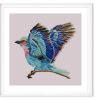
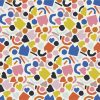
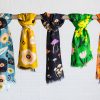
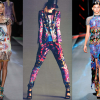
Street Patterns: Paisleys

*post by Victoria Snape, images via: (Top row right) Vera vague, (Top row left) Tammy Jo fashion, (Bottom row right) Dandelion day dreamer, (Bottom row left) Norwegian wood

February 11, 2013

Interview with Amy Voloshin of Dots Per Inch

Amy Voloshin is the creative director of PF Vintage and Printfresh Studio, based in Philadelphia, and we are lucky to have scored an interview with her to share with you today! Recently PF Vintage started a new wide-format digital scanning service called Dots Per Inch, which aims to “help designers work with the art and Vintage pieces that they love, while eliminating the hassle of getting the artwork into a digital format.” As anyone who has spent countless hours trying to scan and piece together a vintage piece of fabric knows, it can be tedious and frustrating! The Dots Per Inch service “not only makes the design process more efficient, it eliminates the costly hours that it can take to scan vintage prints or antique documents on an average office scanner.” Read on to hear what Amy has to say about the service, as well as a taste of what life is like in her textile design studio!

What is your background in textile design? How did you get into the field?
I have my undergrad from RISD & have designed apparel for Urban Outfitters and Free People & formerly I was an art director for a major print studio based in NY. However, Philadelphia had my heart & I wanted to bring business to the area. So 6 years ago I opened my own print studio, which has grown to 19 employees with Print designers, Embellishment designers & an entire Vintage archive & our hard-working sales staff.

What made you decide to start this scanning service? What are your goals for the business? My personal collection of prints became our Vintage archive & with our vintage sales growing we wanted to make it easier for CAD artists to use the Vintage prints that they love to creative new motifs with some beloved elements. Previously designers would have to use a regular office scanner & have to piece together their work in photoshop to get a seamless file. This service now allows designers to immediately have a seamless file for their artwork in up to 600dpi.

What is the most difficult part of scanning artwork? Do you have any tips to share for getting a good scan? Honestly, sometimes the sheer size of some of the artwork we have to scan is a task unto itself. But once you get the piece completely lined up & correctly in place then the process can be fairly smooth. Our scanner is such a high resolution you have to prepare whatever the object is that you are scanning, for example if there is a wrinkle in the fabric, the scanner will pick that up, not just the artwork. Like many new ventures in life, a great tool to have with scanning large artwork for people is patience.

Could you describe a typical day in the studio? What are your responsibilities? What are your favorite parts of the job? Our studio is a lovely place to work, we have our sales team, our designers & our production team and we are all a great group of young fun creative people. It really is a lovely place to come to work every day. I am the Creative Director & co-owner of Printfresh with my husband. I work with our artists & our two Art Directors to create a cohesive collection of prints, graphics & embellishments for our wide array of customers. My favorite part of the job is seeing what amazing things all of my designers come up with & getting to work with a great team of creative people that really do love producing art.

What would you consider to be your most proud achievement so far? In business, I would say in a matter of years going from artist to business owner & helping young artists get their start in surface design is very fulfilling.

What is the atmosphere/energy like in your studio? Frantic? Zen? Is your workspace messy or does it stay very tidy and organized? Our atmosphere here, although it has it’s very brief moments of being frantic, on the whole it’s a really great place to work. I don’t think I would describe it as Zen, but it certainly is relaxed & for the most part quiet. My personal workspace is always pretty tidy. I need it to be to keep my head on straight. It just keeps me clear to have my workspace & my day to stay organized to achieve everything I need to do.

Do you listen to music while working and if so what’s usually playing? I personally do not listen to music while I am working, but almost all of the designers either listen to music or podcasts while they are working on their designs.  We are huge NPR fans, This American Life, The Moth, and How To Do Everything are our studio favorites.  Our pandora station is always set to a mix of indie stuff, old school soul like Sam Cooke, 90’s jams, and Rihanna.

What are your favorite sources for design inspiration? Favorite print & pattern trends? I love getting out to stores and boutiques to see what’s new and to be able to see and touch the fabrics.  Looking online is great, and I love looking at the runways for a lot of our trend direction as it tends to be more conceptual, but there really is something wonderfully tactile about going to a store and seeing something in person.  In the studio we are loving geometric prints right now.  For a long while we were working on watercolor florals, but now we are seeing a drastic change to clean geometric designs.  We are also doing a scenic trend of photo-real tropical and desert scenes, which I’m totally obsessed with, it’s very playful and fun.

Do you have any advice for aspiring designers hoping to break into the textile field? Having a great portfolio is the best way to get into a position within a company.  It’s really important to show beautiful painting and drawing abilities and then demonstrate how you would put those into a print.  Going to tradeshows like Printsource and Indigo by Premier Vision can be very inspiring and can be a good way to see what the textile industry is doing.


Thanks for sharing Amy! Have a great week everyone. -Chelsea

P.S. The first Sellable Sketch workshop of 2013 starts in just a few weeks and we would love to have you join us for this 6 week design intensive. Find out more here.

February 8, 2013

Featured Designer: Sue Brown

It’s Feature Friday! Today I am proud to present the work of Sue Brown, a textile and graphic designer born and raised in Trinidad and Tobago. Sue’s first sketches were “created in her childhood home and inspired by the Caribbean’s colorful culture. Driven by her passion for art and design, she studied Communication Design at New York City College of Technology. Shortly after, Sue decided to start a family and is now raising her three little girls while running a small home business in Columbia, South Carolina.” I was personally drawn to Sue’s vibrant color story development and hand crafted geometric style. To see more of her work please visit her website.

Have a wonderful weekend!

February 6, 2013

Street Patterns: Cats

*post by Victoria Snape, images via: (Top row right) Sophie Parker, (Middle row right and left) Leah Goren, (Bottom row left) Leah Goren

February 5, 2013

Feature Designer: Kindah Khalidy

Hello there! I hope that your week is off to a fantastic start! I am pleased to feature the work of Kindah Khalidy, a painter and surface designer working in California. Kindah received her BFA degree in painting, drawing and textiles from California College of the Arts in 2011 and creates the beautiful limited edition ready-to-wear clothing and accessories that you see above.

“For this collection, I was really trying to think about imagery that stood out and also the color palette of the arrangements that I was making when I first started creating things. I attempted to think back to some of those early environments that I was making and to translate those concepts into sophisticated designs. Textiles are a unique way to bring pieces of ideas with you in the form of functional objects. I love how cross cultural their meanings are. A wrap or shawl is something so versatile in what it can be used for and how it is worn all over the world. I like the idea of people of all different backgrounds making my textiles their own.”

Kindah’s beautiful pieces can be purchased through her online store and I think they are a total steal considering the artistry that goes into creating each piece. Stop by her store or website and say hello!

February 4, 2013

Children’s Trend: Wild Forest Creatures

* post by Claire Carey, images via: (Clockwise): No Added Sugar, Donna Wilson, Babiekins Magazine, Ferm Living, Soft Gallery, Sweet William, Nathalie Lété, Shak Shuka, Lush Designs, Mini and Maximus

Children’s imaginations run wild when they think of a forest at night … what creatures will appear? This is a fun, trend story which is a little bit ‘dark.’ Illustrated images, a strong narrative and a darker colour palette with a pop of bright colour.

January 31, 2013

What It Means To Be A Textile Designer

What does it mean to be a textile designer?

As I was updating The Ultimate Guide to Repeats, this question was at the forefront of my mind. My goal for the course was to welcome designers from other markets such as surface design, graphic design and illustration, to the industry. There are plenty of books and e-courses out there explaining the business side, but what’s up with the artwork? I wanted to share what small changes designers can apply to their artwork to make it more professional and appealing to manufacturers.

But beyond that, I wanted to share the passion that we textile designers feel about our industry, our artwork, our beautiful, wonderful patterns and fabrics.

So…I turned the question over to you–the wonderful readers, students and friends of Pattern Observer and I fell in LOVE with your responses. Here are a few of my favorites:

What does it mean to be a textile designer?

“I feel connected with the world’s history as being a part of one of the oldest artistic traditions known to man.”- Aaryn Nutter of Aaryn West Design Studio

“It’s a different way of looking at things, especially when you are considering the end result, and the product it is going to be on. It is a kind of respect, the same way you respect how a painter uses their oil paints on a canvas or a sculptor creates from clay, a lot of textile designers started out doing all of this by hand on paper with gouache and watercolor and doing repeats before anything was ever digital.” – Lesley Merola of Hunt & Gather

“I think a textile designer needs to have “vision.” I need to look beyond what is on my painting table or computer screen and imagine the design on the end product. And I need to imagine the environment in which the end product will live.” – Cathy Hunt

Textile designers are not just concerned with the design that they develop and how it prints on their Epson printer, it is all about how the design is going to look when it is printed on fabric and sewn into the finished product.

It means thinking big picture. It means thinking about how your design is going to look on hundreds of yards of fabric. It means being OK with the fact that your design is not always going to be the star of the show because it compliments the final product so well, that people instead comment on the beauty of the dress or the accessory. It’s about being connected to the history of the art form, the production process and the finished product.

I am not saying that you need to do repeats all day or be a master screen printer to be a professional textile designer. But being a textile design does mean that you understand the production process and know how to manipulate a pattern to insure that it prints as beautifully on fabric as it does on paper.

Dig deep, learn all that you can through courses, books and the wonderful worldwide web and enjoy the process!

January 30, 2013

Street Patterns: Marbleized

*post by Victoria Snape, images via: (Top row right and left) Blim, (Middle row right) Relogyy, (Middle row left) Asbury hill, (Bottom row right) Lodge vintage textiles, (Bottom row left) Miss C Alexandria

January 25, 2013

Featured Designer: KARL UND OLAF

It’s Feature Friday!!! This week I am proud to feature KARL UND OLAF, which is a new fashion label founded by Swiss graphic designer Adeline Mollard and product designer Aita Bott. The two designers met at “ECAL (Ecole Cantonale d’Art de Lausanne) in 2004. After 5 years working in their respective fields, they decided to unite forces and to collaborate on a side-project, which is KARL UND OLAF.”

Their latest collection is “inspired by lunar landscapes and volcanic atmospheres.” The scarves are available in four different designs, digitally printed on 100% Italian silk, and are available online or in selected shops in Berlin and Zürich. You can also connect with the designers through their facebook page.

I hope that you have a wonderfully relaxing weekend and are able to find a little inspiration or a creative outlet, whichever you may need. All the best! – Michelle


January 23, 2013

Street Patterns: Marbles

Post by Victoria Snape, images via: (Top row left) Found and Feral, (Middle row left) Found and Feral, (Middle row right) Sylvia C Photography, (Bottom row right) Honeymoonmuse

January 21, 2013

Children’s Trend: Geometric Candy

* post by Claire Carey, images via: clock wise from top left: Udder, Ficelle, Ferm Living, Babiekins, April Showers, SketchInc, Field Guide Design, Shak Shuka, Soft Gallery, Oelwein, Griottes

“Pops of bright candy colour work beautifully with simple geometric shapes. This trend is energising and playful, a mix of placement prints and repeat patterns create a fun story.”

January 18, 2013

Designer Feature: Sarah English of Pattern State

One of my favorite parts of Pattern Observer is getting to highlight fantastically talented designers and today’s featured designer, Sarah English has me beaming with pattern love! Sarah has been a textile designer for 10 years, but only recently launched Pattern State, a personal project. “It’s a place where creativity is allowed to extend past the office hours into my own world.  The surface design community is an incredibly exciting place to be right now.”

Her debut collection, which you see above, is inspired by the garden. “I like creating prints that are attractive at first glance, but in this case, are made up of those creatures that can be devastating to a thriving garden: snakes, bats, rabbits and foxes.”

I strongly encourage you to check out her website, blog and spoonflower page, where you can purchase one of the coolest tea towel calendars that I have ever seen! Have a fantastic weekend!!

P.S. This is a reminder to sign up for the Ultimate Guide to Repeats Wait List. Class size is limited and those on the list will receive access to early registration!

January 17, 2013

The Power of a Repeat

* images via: Alexander McQueen Pre-Fall 2013, vogue.com

The life cycle of a print has many stages: trend research, concept development, artwork creation, tweaking, adjusting, coloring, finalizing and putting into repeat. This last step, the repeat process, is often the step that is overlooked or rushed through, although it is one of the most important parts of the design process.

As designers, we spend countless hours developing the right concept, the perfect flower, or the draw-dropping texture, only to rush through the one step that can make or break a print: the repeat. We are so enamored with the elements, or so excited to move onto the next concept, that we forget that our job is not yet done.

We forget to cultivate the beauty of the repeat.
We forget that a repeat is more than a production tool.
We forget that an uninspired repeat can make the most beautifully illustrated flower look unprofessional and lackluster.

In today’s competitive design market, developing thoughtful repeats is one of the easiest (and least expensive!) ways to take your business to the next level. So instead of treating your next repeat as an afterthought, take a deep breath, enjoy the process and see how you can improve your artwork through your repeat. Here are three tips to help get you started:

1. Create multiple elements. If your elements are irregular or hand-drawn, consider drawing more than one version to give the print variety. Many designers illustrate one element, such as a flower or bird, and then copy and paste it until the page is filled. Instead, try creating a second or third flower with a similar look and feel, but with slightly unique elements. One flower petal could be folded ever so gently or one leaf could be blowing in the breeze. These details will give your print a much more professional feel.

2. Flip and rotate. If you don’t have the patience for tip #1, then try flipping, rotating or scaling your main element as you duplicate it within your layout. This will add variety to your print and will help to avoid any unintentional directionality that may be created by your elements. For example, if you have a leaf that is slightly tilted to the right and you use this leaf throughout your print, your entire print is going to feel like it is slightly tilted to the right. By flipping and rotating this leaf you will give the print a more balanced, even feel.

3. Think bigger. One of the most frequent mistakes that many designers make is creating a repeat that is too small. I understand that creating a layout is time consuming, but drawing a four inch square of artwork and then using Illustrator’s pattern tool is not always the right solution. Unless you are developing a very small scale print, I encourage you to create at least 32 cm (12.5”) of artwork.

I’m celebrating the power of repeats in my new four week workshop: The Ultimate Guide to Repeats. The course is updated for CS6 and filled to the brim with fantastic tutorials which will take your patterns from lackluster to razzle-dazzle. Learn more here…

Lots of love –Michelle

January 16, 2013

Street Patterns: Animal Prints

*post by Victoria Snape, images via: (Top row right) Atavios Artefacto, (Top row left) Some velvet vintage, (Bottom row right) Better stay together, (Bottom row left) Emtee

January 14, 2013

Trend Report: A New Take on Toile

*images via: Mother of Pearl Spring ’13 via style.com, “Musée de la Toile de Jouy” by Marilane Borges, “Toile” by Anthony Easton, Duro Olowu via style.com, Ruffian Spring ’13 via CHRISTOPHER MACSURAK, “Musée de la Toile de Jouy” by Marilane Borges

Welcome to the week fellow designers! We started noticing toile out and about last year (see our March Street Pattern post), but the evolution of toile, as seen at the recent Spring ’13 shows, is so exciting! Toile is now being paired with stripes and florals and comes in a range of vibrant and explosive colorways. The highlight of the toile parade has to be Mother of Pearl’s spring collection. We featured our favorite piece (top-left) above, but I encourage you to check out the entire collection here.

Etsy also recently featured the work of Richard Saja, an amazing textile artist who is famous for “embroidering bright and fanciful embellishments on top of historic toile patterns.”

So what is your take on toile? Deconstructed? Embellished? If you have recently created or purchased a toile pattern feel free to share it on the facebook page.

Have a great week!


January 11, 2013

Featured Designer: Elizabeth Olwen

Hello there! This has been such a fulfilling week and I am thrilled to wrap it up with today’s featured designer, Elizabeth Olwen. I fell in love with Elizabeth’s vintage look a few months ago when she was published on Julie Gibbon’s blog, Tractor Girl.  Elizabeth is a Toronto-based surface designer, who is “inspired by pastoral beauty, nature in its most playful forms, folklore, and romance.” I love, love, love Elizabeth’s use of color and have a feeling that we are going to soon see her prints all over the place! Elizabeth is currently seeking licensing opportunities and is available for commissions or freelance work. To check out more of her work and to get in touch, please visit her website. Have a great weekend everyone!

P.S. I am currently working on a HUGE revamp of the Ultimate Guide to Repeats course, which launches February 4th. To join me for this new workshop please register here. More information will be available soon!!

January 9, 2013

Street Patterns: Bicycles

*post by Victoria Snape, images via: (Top row left) Left Right, (Top row right) Lulu and Luca, (Middle row right and left) Lulu and Luca, (Bottom row right and left) Swing kats vintage

January 7, 2013

Trend Report: About Face

* images via: Jeremy Scott Spring ’13 via style.com, “Three faces” by ismomalle, “Crowd” by James Cridland, Bebe Spring ’13 via style.com, Christopher Kane Spring ’13 via style.com, “seeing green” by Katie Tegtmeyer, Proenza Schouler Spring “13 via style.com

I have been asked by several students if there is a trend site or blog that focuses on graphic placements in the textile design world. I have yet to find one, but I think it is a fantastic idea for anyone out there who wants to run with it! So..when Chelsea spotted this “faces” trend on the spring runway, I thought it was perfect for those of you who are in need of some graphic inspiration.

The trend is widespread, from photorealistic to abstract, and was all over the spring runway. Chelsea counted 10 brands with face images being used, including: Aquilano Rimondi, Bebe, Christopher Kane, Custo Barcelona, Dolce and Gabbana, Fashion East, Jeremy Scott, Maki Oh, Proenza Schouler and Viktor & Rolf. That is quite the lineup!

Remember, unless your target customer is the trendiest of the trendy, the runway is a great place to look for inspiration. If a print style or graphic is popular on the runway, this doesn’t mean that the trend will not be popular in more affordable markets in a year or two. Just think about how long the owl trend has been around. So if this trend interests you, think about how you can interpret it in your own style and in a way that speaks to your customer.

Have a great week! – Michelle

January 4, 2013

Featured Designer: Charley Evans

Happy Friday! I hope that you had a wonderful start to the New Year and that all of your goal planning and resolutions are off to a great start! Do you have a certain program or strategy to your yearly goals? Is there a resource you can share with the community? I have been working through Danielle Laporte’s Desire Map and have already seen some major shifts in the way I think about my day to day actions. I’ll be sharing more from the course as I work through the rest of the book, but so far I found it to be a fantastic way to kick off the new year!

So back to patterns! ; ) Today’s featured designer is Charley Evans, who is a recent graduate from the University of the West of England. She creates her prints by combining “her own drawings and collage with painting and photography, which are integrated in Photoshop.” I love everything about these pieces, especially the layout of the first print. Charley is currently developing printed products to sell online and is very interested in freelance work that would allow her to expand into this field. To see more of Charley’s work please visit her website, blog, or grab one of her fabulous prints for your new iphone case here.

Related Posts Plugin for WordPress, Blogger...